Description
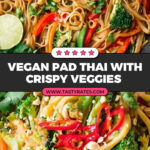
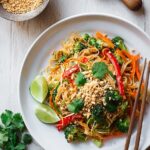
This vegan pad thai is a flavorful, colorful, and satisfying plant-based take on the classic Thai stir-fried noodle dish. Featuring wide rice noodles, fresh vegetables, and a tangy, sweet, and savory tamarind-based sauce, it is quick to prepare, gluten-free, and perfect for a wholesome weeknight meal.
Ingredients
Scale
Noodles
- 200 g / 7 oz wide rice noodles
Vegetables
- 2 spring onions, sliced
- 2 garlic cloves, finely sliced
- 1 hot red chilli, finely sliced
- 2 carrots, shaved into ribbons with a speed peeler
- A large handful of green beans, cut diagonally
- ½ small broccoli, divided into florets
- 1 red pepper, finely sliced
Sauce & Seasoning
- 5 tbsp tamarind sauce*
- 1 tbsp tamari / soy sauce
- 2 tbsp vegan fish sauce* or more tamari / soy sauce
- 2-3 tbsp maple syrup, adjust to taste
Others
- 2 tbsp peanut oil (or other high smoke point oil)
- ¼ cup roasted & unsalted peanuts, pounded in a pestle & mortar
- ½ cup mung bean sprouts
- Fresh coriander, to garnish
Instructions
- Prepare Noodles: Soak the rice noodles according to the packet instructions, but do not cook them fully as they will be stir-fried later. While soaking, lift the lid occasionally to stir gently to prevent clumping and sticking. Drain and set aside. Optionally toss a little oil through noodles to avoid sticking.
- Make the Sauce: In a small bowl, combine tamarind sauce, tamari or soy sauce, vegan fish sauce (or additional tamari), and maple syrup. Start with less tamarind if using concentrated shop-bought paste and adjust taste.
- Cook Aromatics: Heat 1 tablespoon of oil in a wok or large frying pan over high heat until nearly smoking. Add sliced spring onions, garlic, and chilli and stir-fry constantly until the onions soften and garlic is fragrant. Remove and set aside, leaving the oil in the wok.
- Stir-fry Vegetables: Add another tablespoon of oil to the same wok without washing. Add vegetables in sequence with a minute or two between additions: broccoli florets, green beans, red pepper slices, and carrot ribbons. Stir-fry until vegetables are cooked but still crisp. Transfer to a plate.
- Combine Noodles and Sauce: Pour the prepared sauce into the wok, add the drained noodles and gently separate any clumps by stirring. Return the cooked aromatics and vegetables to the wok, mixing everything thoroughly.
- Heat Through: Stir-fry everything together for 1-2 minutes to allow the flavors to meld and the noodles to absorb the sauce.
- Serve: Divide the pad thai between 2-3 plates. Garnish generously with mung bean sprouts, crushed peanuts, and fresh coriander. Serve with lime wedges on the side if desired.
Notes
- This vegan pad thai is quick to prepare and naturally gluten-free when using tamari or gluten-free soy sauce.
- Adjust the maple syrup to balance the sourness of tamarind to your taste preference.
- Using fresh, high-quality tamarind paste or homemade tamarind block paste improves flavor control.
- You can substitute or add vegetables according to availability and preference, maintaining the stir-fry technique for texture.
- Peanut oil is recommended for its high smoke point and flavor, but any neutral high-heat oil works.
Nutrition
- Serving Size: 1 plate (approx. one-third of recipe)
- Calories: 534
- Sugar: 27.6 g
- Sodium: 1882 mg
- Fat: 15.7 g
- Saturated Fat: 2.6 g
- Unsaturated Fat: 13.1 g
- Trans Fat: 0 g
- Carbohydrates: 88.8 g
- Fiber: 5.7 g
- Protein: 10.6 g
- Cholesterol: 0 mg