
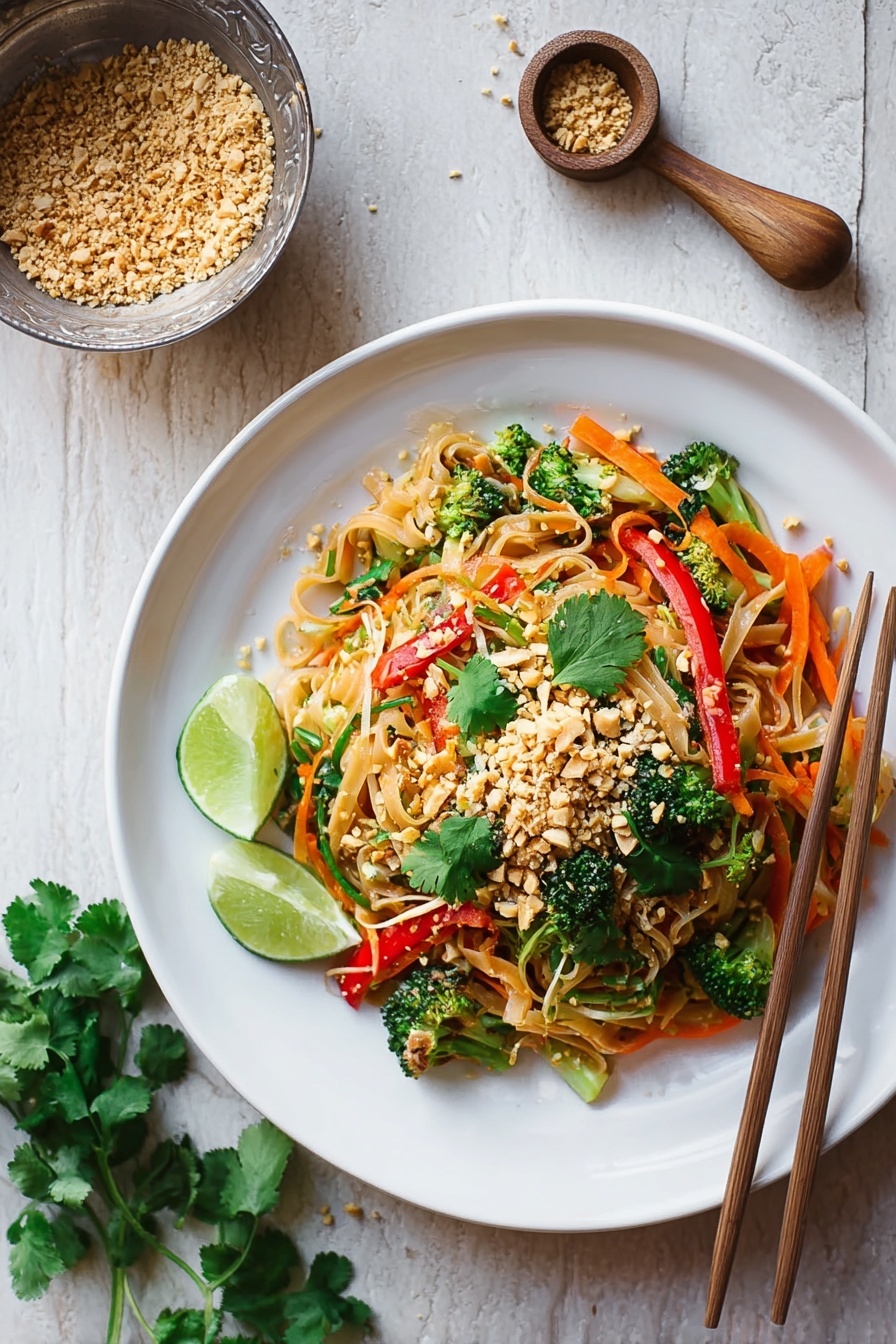
If you’re craving a vibrant, flavorful dish that’s as satisfying as it is wholesome, you’re going to adore this Vegan Pad Thai Recipe. It’s packed with fresh veggies, a tangy-sweet tamarind sauce, and those beloved chewy rice noodles that soak up all the goodness. I absolutely love how this turns out every time, and I’m excited to share the step-by-step with you so you can make this fan-freaking-tastic meal in your own kitchen!
Why You’ll Love This Recipe
- Vibrant Veggies: A colorful mix that keeps each bite fresh and crunchy.
- Balanced Flavors: Tangy tamarind meets a hint of sweetness and umami for a perfect punch.
- Quick & Easy: You’ll be surprised how fast this comes together on a busy weeknight.
- Totally Vegan and Gluten-Free: Ideal if you’re accommodating dietary preferences without sacrificing flavor.

Ingredients You’ll Need
The ingredients here really shine together, bringing that authentic pad thai vibe with a generous vegan twist. When shopping, I like to pick the freshest veggies I can find, and if you can find a good quality tamarind sauce, it makes all the difference.
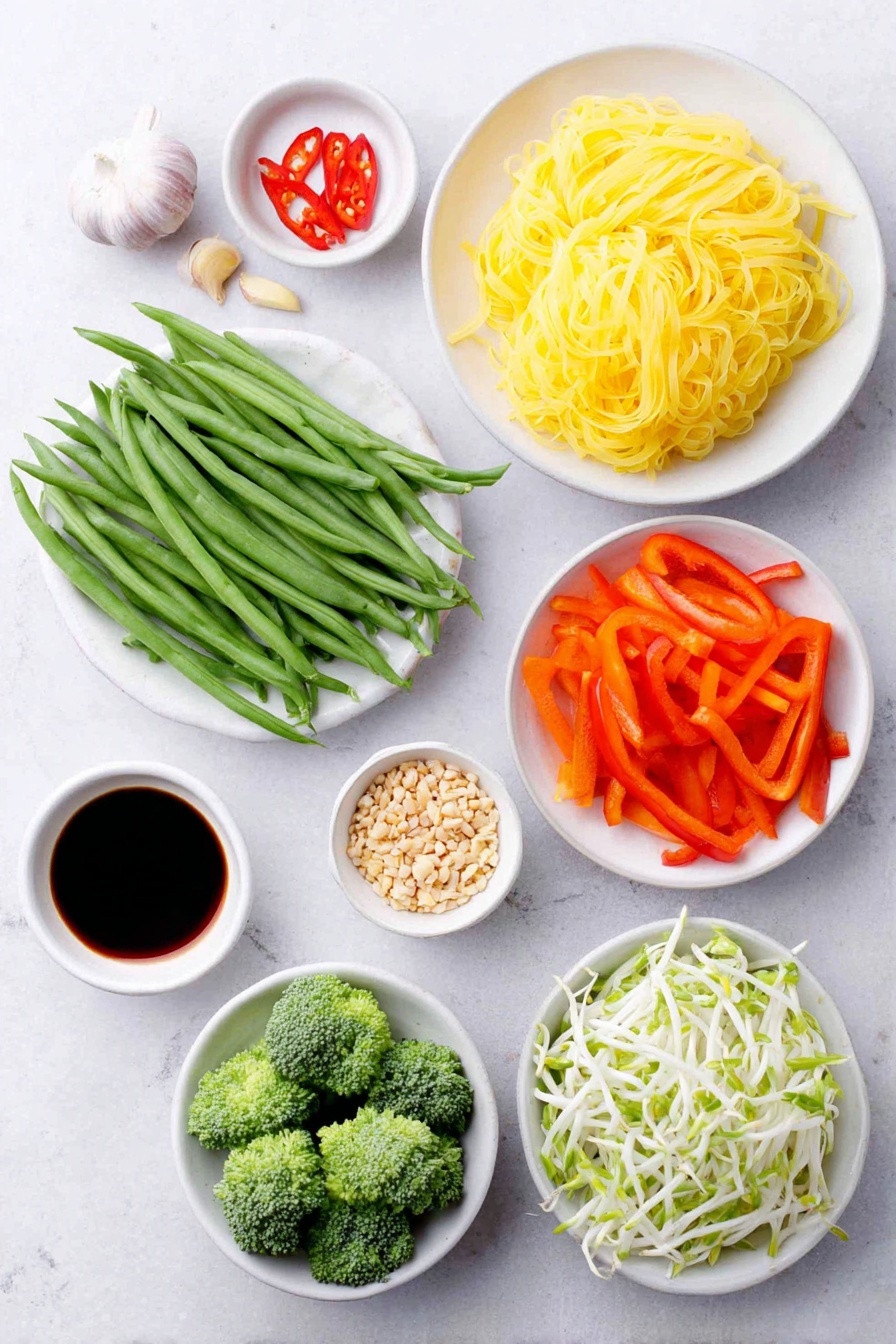
- Wide rice noodles: These are essential to get that authentic texture—soak carefully to avoid mushiness.
- Peanut oil: I use peanut oil for its high smoke point and subtle nutty flavor, but any neutral oil works.
- Spring onions: They add a mild brightness that really lifts the dish.
- Garlic: Fresh and sliced finely, it brings that aromatic depth.
- Hot red chilli: Adjust how spicy you want it—love the kick it adds!
- Carrots: Shaved into ribbons they provide just the right crunch and color.
- Green beans: Cut diagonally for a nice bite and color contrast.
- Broccoli: I use small florets for texture and vibrant green in every bite.
- Red pepper: Adds sweetness and a pop of color.
- Roasted & unsalted peanuts: Pound them for that perfect crunch topping.
- Mung bean sprouts: They’re fresh and crisp, an essential garnish in my book.
- Fresh coriander: I sprinkle this on at the end to infuse that herbal brightness.
- Tamarind sauce: This tangy magic really makes the flavor pop; start light if it’s store-bought.
- Tamari or soy sauce: Use tamari for gluten-free, and I sometimes add a splash more for taste.
- Vegan fish sauce or extra tamari: Adds that seafood-like umami depth—totally optional but worth trying.
- Maple syrup: Balances the sour and salty with gentle sweetness.
Variations
One of the things I adore about this Vegan Pad Thai Recipe is how easy it is to make it your own. Depending on what you have on hand or your personal zing, adjusting veggies or heat levels makes it feel fresh every time.
- Protein Boost: I sometimes add crispy tofu cubes or tempeh for an extra filling meal.
- Extra Heat: If you like it spicy, toss in more fresh red chillis or a splash of chili crisp at the end.
- Nut-Free: Swap peanuts for toasted pumpkin seeds if you have allergies, just as tasty!
- Seasonal Veggies: I’ve tweaked this for spring with asparagus or summer with snap peas and it always works.
How to Make Vegan Pad Thai Recipe
Step 1: Prep Noodles Like a Pro
Start by soaking your wide rice noodles according to the package instructions, but don’t fully cook them just yet. Here’s a trick I learned the hard way: lift the lid partway through soaking and give the noodles a good stir—this stops them from sticking or clumping, which can ruin the texture. After soaking, drain them well and set aside. You can toss a little oil through them to prevent sticking, but I often skip this without any issues.
Step 2: Whip Up the Flavorful Sauce
Mix tamarind sauce, tamari, vegan fish sauce (or extra tamari), and maple syrup in a small bowl. If you’re using store-bought tamarind paste, take it easy at first because it can be quite sour and concentrated compared to homemade. Taste and adjust the balance of sour, salty, and sweet to your liking—this step really sets the tone for your Pad Thai!
Step 3: Stir-Fry Aromatics to Perfection
Heat a wok or large frying pan over high heat with 1 tbsp peanut oil until just smoking. Add sliced spring onions, garlic, and chilli—stir them constantly to avoid burning. You want the spring onions softening and the garlic fragrant, which happens quickly (around 1-2 minutes). Then transfer these aromatics to a plate, but keep all that flavorful oil in the wok—it carries so much aroma!
Step 4: Cook the Veggies Just Right
Add another tablespoon of oil into the same wok (no washing needed) and start stir-frying the veggies in this order: broccoli, green beans, red pepper, then carrot ribbons, leaving a minute or two between each addition. You want them cooked but still crunchy, so keep tossing and watch the color stay bright—that’s the sign of perfectly cooked veggies.
Step 5: Bring It All Together
Transfer the veggies to a big plate and pour the sauce into the hot wok. Add the noodles next—don’t worry if they look a little clumped; the sauce and heat will loosen them up. Then toss back in the spring onions, garlic, chilli, and your cooked veggies. Stir-fry everything together for 1-2 minutes until warmed through and well combined. This is the moment the magic happens!
Step 6: Serve with Crunch and Freshness
Divide the Pad Thai between plates and top generously with mung bean sprouts and crushed peanuts. I always serve with lime wedges on the side for that fresh zing that pulls the flavors together beautifully.
Pro Tips for Making Vegan Pad Thai Recipe
- Avoid Overcooking Noodles: Soak, don’t boil fully, or they’ll turn mushy when stir-frying again.
- Layer Flavors: Stir-frying aromatics first in hot oil builds a deeper flavor base you’ll notice in every bite.
- Prep All Ingredients First: Veggies cook fast; having everything ready ensures you keep the heat up and veggies crisp.
- Taste the Sauce Early: The tangy-sweet balance is key, so start with less tamarind and maple syrup, then adjust before mixing everything.
How to Serve Vegan Pad Thai Recipe
Garnishes
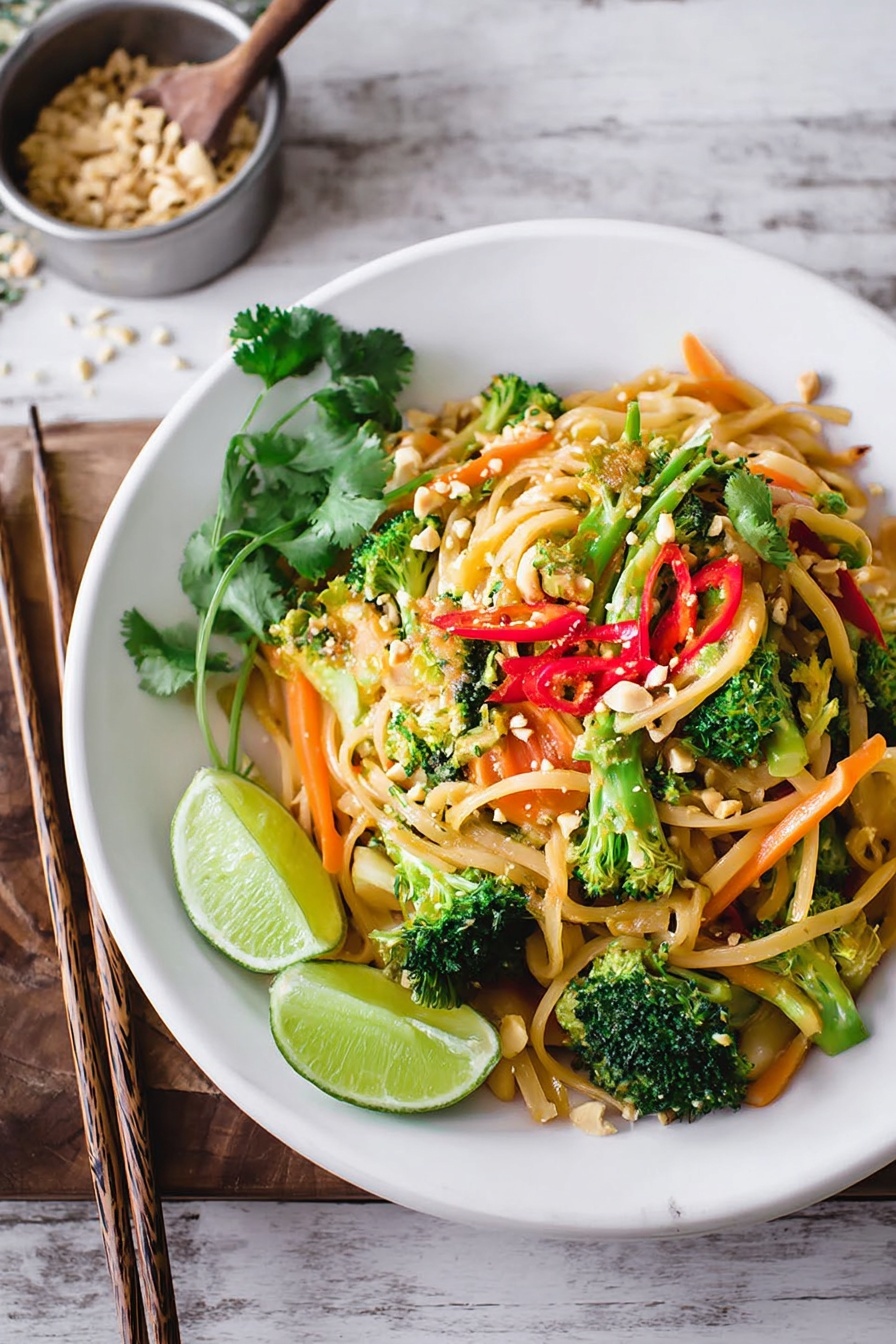
I always top my Vegan Pad Thai with fresh mung bean sprouts and a generous sprinkle of crushed roasted peanuts—that crunch is everything! A handful of chopped fresh coriander adds a fragrant finish, and don’t forget the lime wedges on the side; a generous squeeze right before eating brightens up the entire plate.
Side Dishes
For a complementary meal, I love pairing this with simple cucumber salad or steamed edamame tossed with sea salt. If you want to keep things light, a side of lightly pickled carrots or a miso soup works beautifully too.
Creative Ways to Present
When I’ve had friends over, I like to serve this Vegan Pad Thai in individual coconut shells or banana leaf bowls for a fun, tropical vibe. Wrapping lime wedges and crushed peanuts in little lettuce cups on the side adds a fancy, interactive touch everyone enjoys!
Make Ahead and Storage
Storing Leftovers
Any leftovers store well in an airtight container in the fridge for up to 2 days. I always let it cool completely before sealing to avoid soggy noodles. When reheading, tossing with a bit of oil helps revive the texture.
Freezing
I’ve tried freezing Vegan Pad Thai a few times, but I recommend skipping this because the noodles can get mushy when thawed. If you must freeze, pack it tightly with minimal sauce and thaw slowly in the fridge to keep the best texture.
Reheating
Reheat leftovers in a hot skillet with a splash of water or oil, stirring frequently to separate noodles and warm evenly. Microwave works too, but tossing mid-cycle helps avoid clumps and sogginess.
FAQs
-
Can I use regular soy sauce instead of tamari?
Absolutely! Tamari is gluten-free soy sauce, but if gluten isn’t a concern, regular soy sauce works just fine. Just taste the sauce and adjust saltiness since soy sauces can vary in salt content.
-
How do I make sure my rice noodles don’t stick together?
Stir the noodles gently during soaking to prevent clumps and avoid overcooking them. After draining, a little toss of oil can help, but stirring well when adding to the wok usually does the trick.
-
What can I use if I don’t have vegan fish sauce?
You can simply use extra tamari or soy sauce as a substitute. For that umami depth, a splash of mushroom soy sauce or a bit of miso paste dissolved in water can also work wonders.
-
Is this Vegan Pad Thai Recipe suitable for meal prep?
Yes! It keeps well in the fridge for a couple of days and reheats nicely, making it a great option for prepping lunches or dinners in advance.
Final Thoughts
This Vegan Pad Thai Recipe has become one of my go-to comfort meals. It’s easy to pull together, bright and flavorful, and everyone in the family goes crazy for it—even my non-vegan friends! Once you get the hang of soaking noodles just right and mastering that tangy sauce, you’ll want to make this over and over. Seriously, give it a try—I’m confident it’ll become a favorite in your kitchen too.
Print
Vegan Pad Thai Recipe
- Prep Time: 20 min
- Cook Time: 15 min
- Total Time: 35 min
- Yield: Serves 2-3
- Category: Main Course
- Method: Stovetop
- Cuisine: Thai
- Diet: Vegan
Description
This vegan pad thai is a flavorful, colorful, and satisfying plant-based take on the classic Thai stir-fried noodle dish. Featuring wide rice noodles, fresh vegetables, and a tangy, sweet, and savory tamarind-based sauce, it is quick to prepare, gluten-free, and perfect for a wholesome weeknight meal.
Ingredients
Noodles
- 200 g / 7 oz wide rice noodles
Vegetables
- 2 spring onions, sliced
- 2 garlic cloves, finely sliced
- 1 hot red chilli, finely sliced
- 2 carrots, shaved into ribbons with a speed peeler
- A large handful of green beans, cut diagonally
- ½ small broccoli, divided into florets
- 1 red pepper, finely sliced
Sauce & Seasoning
- 5 tbsp tamarind sauce*
- 1 tbsp tamari / soy sauce
- 2 tbsp vegan fish sauce* or more tamari / soy sauce
- 2-3 tbsp maple syrup, adjust to taste
Others
- 2 tbsp peanut oil (or other high smoke point oil)
- ¼ cup roasted & unsalted peanuts, pounded in a pestle & mortar
- ½ cup mung bean sprouts
- Fresh coriander, to garnish
Instructions
- Prepare Noodles: Soak the rice noodles according to the packet instructions, but do not cook them fully as they will be stir-fried later. While soaking, lift the lid occasionally to stir gently to prevent clumping and sticking. Drain and set aside. Optionally toss a little oil through noodles to avoid sticking.
- Make the Sauce: In a small bowl, combine tamarind sauce, tamari or soy sauce, vegan fish sauce (or additional tamari), and maple syrup. Start with less tamarind if using concentrated shop-bought paste and adjust taste.
- Cook Aromatics: Heat 1 tablespoon of oil in a wok or large frying pan over high heat until nearly smoking. Add sliced spring onions, garlic, and chilli and stir-fry constantly until the onions soften and garlic is fragrant. Remove and set aside, leaving the oil in the wok.
- Stir-fry Vegetables: Add another tablespoon of oil to the same wok without washing. Add vegetables in sequence with a minute or two between additions: broccoli florets, green beans, red pepper slices, and carrot ribbons. Stir-fry until vegetables are cooked but still crisp. Transfer to a plate.
- Combine Noodles and Sauce: Pour the prepared sauce into the wok, add the drained noodles and gently separate any clumps by stirring. Return the cooked aromatics and vegetables to the wok, mixing everything thoroughly.
- Heat Through: Stir-fry everything together for 1-2 minutes to allow the flavors to meld and the noodles to absorb the sauce.
- Serve: Divide the pad thai between 2-3 plates. Garnish generously with mung bean sprouts, crushed peanuts, and fresh coriander. Serve with lime wedges on the side if desired.
Notes
- This vegan pad thai is quick to prepare and naturally gluten-free when using tamari or gluten-free soy sauce.
- Adjust the maple syrup to balance the sourness of tamarind to your taste preference.
- Using fresh, high-quality tamarind paste or homemade tamarind block paste improves flavor control.
- You can substitute or add vegetables according to availability and preference, maintaining the stir-fry technique for texture.
- Peanut oil is recommended for its high smoke point and flavor, but any neutral high-heat oil works.
Nutrition
- Serving Size: 1 plate (approx. one-third of recipe)
- Calories: 534
- Sugar: 27.6 g
- Sodium: 1882 mg
- Fat: 15.7 g
- Saturated Fat: 2.6 g
- Unsaturated Fat: 13.1 g
- Trans Fat: 0 g
- Carbohydrates: 88.8 g
- Fiber: 5.7 g
- Protein: 10.6 g
- Cholesterol: 0 mg