

If you’ve been on the hunt for a vibrant, cozy, and downright delicious weeknight meal, you’re in for a treat with this Thai Chickpea Coconut Curry Recipe. It’s packed with bold flavors, rich coconut creaminess, and a perfect balance of spice that’s easy enough to whip up in about 30 minutes. I absolutely love how this recipe brings together crunchy veggies, hearty chickpeas, and that unmistakable hint of peanut butter for a comforting bowl of goodness that’s as satisfying as it is nourishing.
Why You’ll Love This Recipe
- Simple One-Pan Meal: Everything cooks in one skillet, making cleanup a breeze and dinner a snap.
- Vibrant Plant-Based Protein: Chickpeas provide a satisfying protein punch, perfect for vegetarian and vegan diets.
- Balanced Flavors and Textures: Creamy coconut milk, zesty curry paste, and crunchy fresh veggies create a harmony that keeps you coming back.
- Customizable Spice Level: You control the heat, so it’s kid-friendly or fiery, whatever you prefer.

Ingredients You’ll Need
The magic behind this Thai Chickpea Coconut Curry Recipe is all in its simple, fresh ingredients that come together perfectly. I’ve found that picking good quality coconut milk and fresh ginger really elevates the flavor, so keep an eye out for those when you shop.

- Coconut oil: Adds a subtle tropical flavor and is perfect for sautéing without overpowering.
- Garlic: Freshly minced, because nothing beats that punch of aroma.
- Fresh ginger: Grated for a fresh zing that lifts the entire curry.
- Carrot: Thinly sliced to soften quickly and add natural sweetness.
- Cauliflower florets: Breaks down perfectly in this curry and absorbs all the luscious sauce.
- Green onions: Both cooked and fresh, they add a lovely mild onion flavor.
- Lite coconut milk: Use canned for creaminess without too much heaviness.
- Water or vegetarian broth: To balance the sauce and control thickness.
- Red curry paste: The heart of Thai flavor – aromatic, spicy, and packed with herbs.
- Natural creamy peanut butter: I use peanut butter for richness and a subtle nutty undertone (cashew butter works great too!).
- Gluten-free soy sauce or coconut aminos: Adds depth and savory umami.
- Ground turmeric: Adds warmth and beautiful color.
- Cayenne pepper: For heat – adjust to your zest!
- Salt: Enhances all the flavors.
- Red bell pepper: Julienned for both color and crunch.
- Chickpeas: Rinsed and drained, they’re packed with protein and fiber.
- Frozen peas: Added last for a pop of sweetness and freshness.
- Fresh cilantro: To garnish with bright herbal notes.
- Chopped peanuts or cashews: Provides a lovely crunch on top.
Variations
One of my favorite things about this Thai Chickpea Coconut Curry Recipe is how easy it is to tweak based on what you have in your kitchen or your mood. I’ll often switch up the veggies or protein to keep things fresh and exciting.
- Use different veggies: I’ve swapped cauliflower for sweet potatoes or butternut squash for a sweeter, heartier feel that’s just as cozy.
- Protein swap: For an extra protein boost, try adding tofu cubes or tempeh—both soak up the curry flavors beautifully.
- Make it spicy or mild: I adjust the cayenne and curry paste quantities depending on the crowd—milder for family dinners, extra heat for date nights.
- Nut alternatives: Cashew butter works wonderfully if you want a slightly different nutty profile or a nuttier taste than peanut butter.
How to Make Thai Chickpea Coconut Curry Recipe
Step 1: Sauté your aromatics and veggies
Heat a large, deep skillet over medium-high heat and melt the coconut oil until shimmering. Toss in the garlic and ginger, cooking just about 30 seconds until fragrant—this little bit of aromatics lays the flavor foundation, so don’t rush it! Then add the green onions, carrot, and cauliflower florets. Stir and sauté for 3 to 5 minutes, letting the cauliflower get a slight golden edge—that slight caramelization adds so much flavor depth that you’ll notice in every bite.
Step 2: Add the creamy coconut curry base
Next up: pour in the lite coconut milk, water (or veggie broth if you prefer), and stir in the red curry paste and peanut butter until well combined. Follow up with a splash of soy sauce or coconut aminos, then sprinkle in turmeric, cayenne pepper, and salt. I usually give it a good stir to make sure all those flavors swirl beautifully together.
Step 3: Simmer and build flavor
Add the julienned red pepper and rinsed chickpeas now, then lower your heat to medium-low. Let everything simmer gently for about 10 minutes — this is when the curry thickens up, flavors marry, and those chickpeas soak up all that tasty sauce. Be sure to taste and adjust salt or spice here if needed. It’s your curry, after all!
Step 4: Finish with peas and garnishes
Finally, stir in the frozen peas and give it another minute of simmering to warm them through and lock in that vibrant green pop. Then dish out your curry into bowls or meal prep containers, and sprinkle generously with fresh cilantro, diced green onions, and chopped peanuts or cashews for a little extra crunch and freshness. Trust me, these finishing touches take it from good to absolutely crave-worthy.
Pro Tips for Making Thai Chickpea Coconut Curry Recipe
- Toast Your Spices: I like to add a quick toast to the turmeric and curry paste in the pan before adding liquids—it amps up the aroma beautifully.
- Don’t Skip Caramelizing: Taking the time to lightly brown the cauliflower gives your curry that irresistible depth I guarantee you’ll notice.
- Adjust Thickness with Liquids: If your curry seems too thick, a splash more water or broth lets you customize the sauce exactly how you like it.
- Freshness Matters: Use fresh cilantro and green onions for garnish—they brighten the dish and add a lovely contrast in texture and flavor.
How to Serve Thai Chickpea Coconut Curry Recipe

Garnishes
I always garnish this curry with a generous handful of fresh cilantro and more green onions than you’d think—those fresh, fresh notes really lift the richness of the coconut and peanut flavors. A sprinkle of chopped peanuts or cashews is non-negotiable for me; the crunch takes every bite to the next level.
Side Dishes
This curry begs for something to soak up its creamy sauce, so I love pairing it with brown rice or fluffy quinoa. Both add a wholesome texture and complete the meal with plant-based protein. If you want a lighter option, cauliflower rice works great too and keeps the carbs lower.
Creative Ways to Present
For a dinner party, I like to serve the curry in individual coconut bowls or vibrant ceramic dishes to play up the tropical vibe. Garnishing with edible flowers or extra herbs feels fancy but is super simple. Layering with a side of grilled pineapple or mango chutney adds a unique brightness your guests will rave about.
Make Ahead and Storage
Storing Leftovers
I store leftover Thai Chickpea Coconut Curry Recipe in airtight containers in the fridge—it keeps perfectly for 3 to 4 days. The flavors actually deepen overnight, making it even more delicious the next day, which is a great tip if you want to prep ahead of time!
Freezing
When I freeze this curry, I portion it out into freezer-safe containers or bags. It freezes well for up to 3 months. Just remember to leave a little space at the top of your container because the coconut milk can expand slightly. Thaw overnight in the fridge before reheating for best results.
Reheating
Reheat leftovers gently on the stovetop over medium heat, adding a splash of water or broth if the sauce has thickened too much. This helps bring back that perfect creamy consistency without drying out the chickpeas or veggies. Microwave works in a pinch too, but stirring halfway through will keep it even.
FAQs
-
Can I make this Thai Chickpea Coconut Curry Recipe vegan and gluten-free?
Absolutely! This recipe is naturally vegan if you use a plant-based peanut butter and a gluten-free soy sauce alternative like coconut aminos to keep it gluten-free. Plus, all the core ingredients are plant-based, making it a great option for various dietary preferences.
-
What can I substitute for peanut butter in this curry?
If you’re allergic or just not a peanut butter fan, cashew butter is a fantastic substitute—it offers a similar creamy texture and mild nutty flavor. Almond butter can work too, but it’s a bit stronger, so start with less and adjust to taste.
-
How spicy is this Thai Chickpea Coconut Curry Recipe?
It has a moderate heat mainly from the red curry paste and a touch of cayenne pepper. You can easily control the spice level by adding less cayenne for a milder curry or more if you like it fiery. Since you’re adding spices gradually, you can taste as you go to suit your palate.
-
Can I prepare this curry ahead of time?
Yes! This curry actually tastes even better the next day as the flavors meld. You can make it a day in advance and refrigerate it in an airtight container. Just reheat gently before serving, and add fresh garnishes to brighten it up.
Final Thoughts
I can’t recommend this Thai Chickpea Coconut Curry Recipe enough—it’s one of those dishes that feels like a warm hug on a plate. Whether you’re cooking for yourself, feeding your family, or entertaining friends, it’s easy to make, packed with flavor, and versatile enough to fit your taste. Give it a try and I promise you’ll find it becoming a staple in your dinner rotation. Enjoy every spoonful!
Print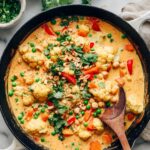
Thai Chickpea Coconut Curry Recipe
- Prep Time: 15 minutes
- Cook Time: 15 minutes
- Total Time: 30 minutes
- Yield: 4 servings
- Category: Main Course
- Method: Stovetop
- Cuisine: Thai
- Diet: Vegetarian
Description
This Thai Peanut Coconut Cauliflower Chickpea Curry is a vibrant, plant-based dish bursting with bold flavors and wholesome ingredients. Featuring tender cauliflower, creamy coconut milk, and protein-packed chickpeas, this curry is enhanced with a rich blend of peanut butter, red curry paste, and aromatic spices. Perfect for a cozy weekday meal, it comes together quickly in one pan, making it both delicious and convenient.
Ingredients
For the Curry:
- ½ tablespoon coconut oil
- 3 cloves garlic, minced
- 1 tablespoon freshly grated ginger
- 1 large carrot, thinly sliced
- 1 small head cauliflower, broken into florets (3-4 cups)
- 1 bunch green onions, diced
- 1 (15 ounce) can lite coconut milk
- ⅓ cup water or vegetarian broth
- 2 tablespoons red curry paste
- 2 tablespoons natural creamy peanut butter (or cashew butter)
- ½ tablespoon gluten-free soy sauce or coconut aminos
- ½ teaspoon ground turmeric
- ½ teaspoon cayenne pepper, plus more if you like heat
- ½ teaspoon salt
- 1 red pepper, julienned
- 1 (15 ounce) can chickpeas, rinsed and drained
- ½ cup frozen peas
To Garnish:
- Fresh cilantro
- Green onion
- Chopped peanuts or cashews
Instructions
- Heat Aromatics: Place a large deep 10-inch skillet or pot over medium-high heat. Add coconut oil, garlic, and ginger, cooking for 30 seconds until fragrant.
- Sauté Vegetables: Add diced green onion, thinly sliced carrot, and cauliflower florets to the skillet. Sauté for 3-5 minutes until cauliflower begins to brown slightly and onions soften.
- Add Curry Base: Pour in the lite coconut milk, water or vegetarian broth, red curry paste, creamy peanut butter, gluten-free soy sauce or coconut aminos, cayenne pepper, turmeric, and salt. Stir thoroughly to combine all ingredients.
- Incorporate More Vegetables and Chickpeas: Stir in julienned red pepper and rinsed chickpeas. Reduce heat to medium-low and let the curry simmer gently for 10 minutes, allowing flavors to meld. Taste and adjust seasonings if needed.
- Finish with Peas: Stir in frozen peas and simmer for an additional minute to warm through.
- Serve and Garnish: Divide curry into bowls or meal prep containers. Garnish with fresh cilantro, green onion, and chopped peanuts or cashews. Serve with brown rice or quinoa for a complete, protein-packed plant-based meal. Enjoy!
Notes
- This curry is a quick and easy one-pan meal, perfect for busy weeknights.
- Using lite coconut milk keeps the curry creamy but lower in fat.
- Adjust the cayenne pepper to control the spiciness to your liking.
- Opt for gluten-free soy sauce or coconut aminos to make this recipe gluten-free.
- Can be stored in airtight containers for up to 4 days in the refrigerator.
- Pairing with quinoa adds extra protein for vegetarians.
Nutrition
- Serving Size: 1 serving
- Calories: 343 kcal
- Sugar: 7.4 g
- Sodium: 520 mg
- Fat: 15.2 g
- Saturated Fat: 9 g
- Unsaturated Fat: 6 g
- Trans Fat: 0 g
- Carbohydrates: 40.9 g
- Fiber: 9 g
- Protein: 10.6 g
- Cholesterol: 0 mg