
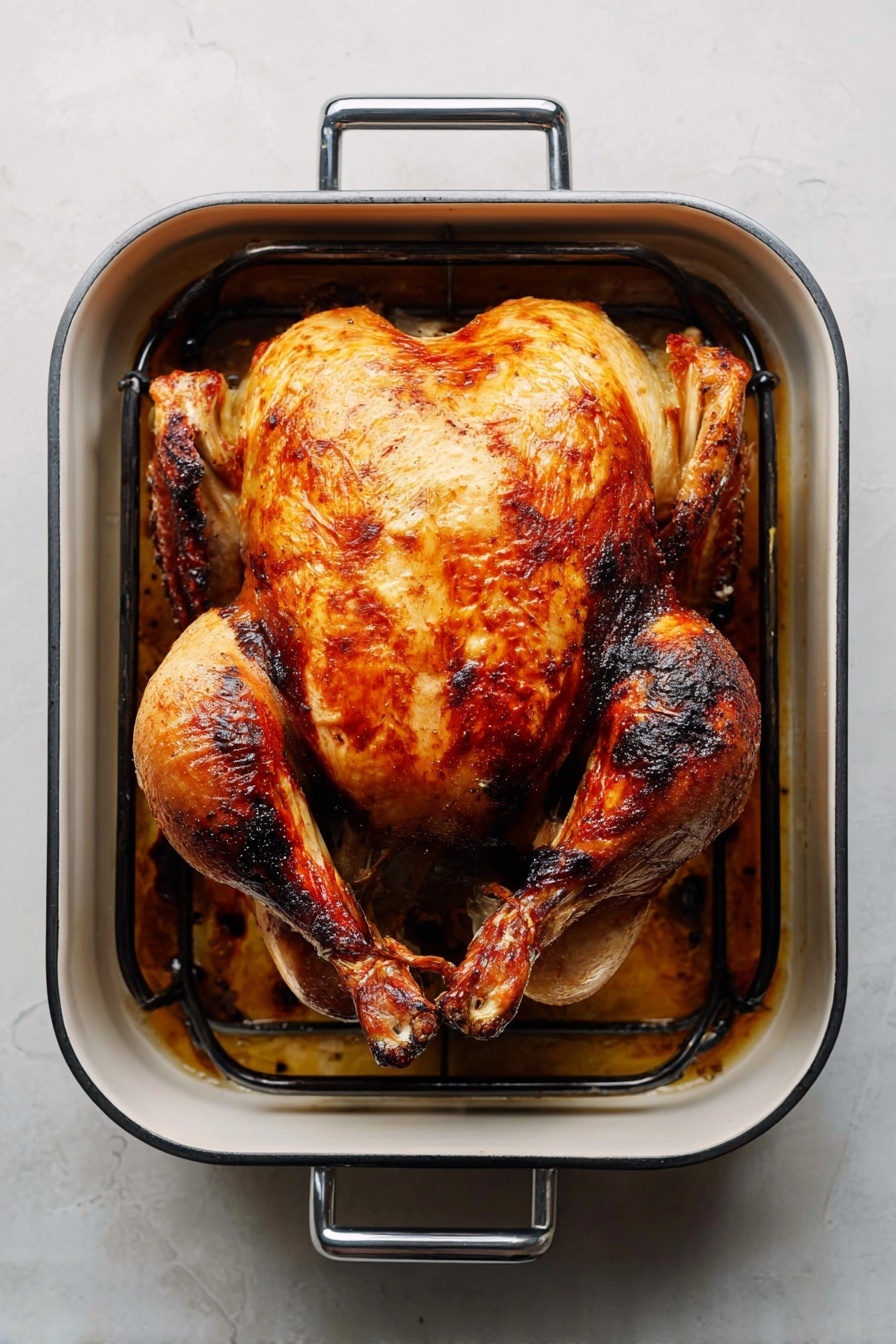
If you’re looking for that perfectly tender, flavorful turkey that practically melts in your mouth, you’ve got to try this Juicy Dry Brine Turkey Recipe. I absolutely love how this method delivers juicy meat with crispy skin every single time—plus, it’s much easier than a wet brine and requires way less fuss. When I first tried dry brining, I was surprised how simple it was, and it quickly became my go-to for holiday dinners.
Why You’ll Love This Recipe
- Effortless Juiciness: The dry brine draws flavor deep into the turkey while keeping the meat unbelievably moist.
- Crispy Skin: Because the skin dries out in the fridge during brining, it crisps up beautifully in the oven without extra work.
- Simple Ingredients: You likely already have everything you need in your pantry and fridge.
- Reliable Timing: The recipe provides a clear roasting window and thermometer tips to take the guesswork out of turkey day.

Ingredients You’ll Need
All the ingredients in this Juicy Dry Brine Turkey Recipe come together perfectly to bring classic herb flavors while making the turkey irresistibly moist and flavorful. Here are a few tips for choosing the best components to elevate your bird!
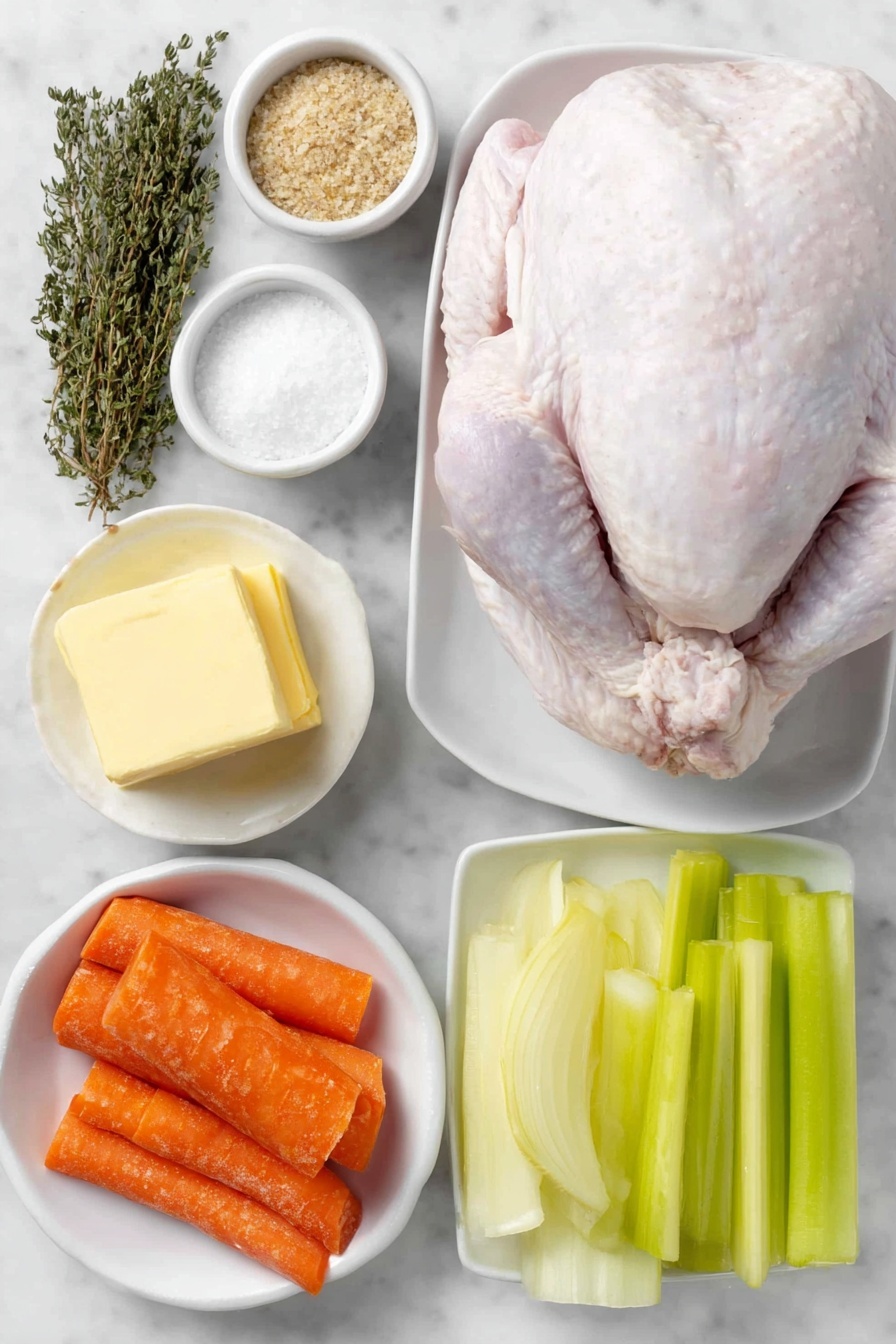
- Turkey: I recommend choosing a natural, non-injected turkey for the best dry brine results; avoid self-basting or injected varieties if possible.
- Light brown sugar: Adds a subtle sweetness that balances the savory brine flavors and helps with skin browning.
- Kosher salt: Morton or Diamond kosher salt works best—it’s easier to control the seasoning than with finer table salt.
- Dried thyme: Provides that comforting earthy herb note that pairs beautifully with poultry.
- Dried sage or ground sage: Essential for that traditional, aromatic turkey flavor we all crave.
- Black pepper: Freshly ground gives you a nice mild heat and depth, but don’t overdo it! A teaspoon is perfect.
- Unsalted butter: Room temperature for easy spreading and richer, golden skin once roasted.
- Yellow onion, carrots, celery: These aromatics create a flavorful base in the roasting pan, infusing the turkey as it cooks and providing drippings you can use for gravy.
Variations
I love to keep this recipe classic, but I’ve also played around with some variations depending on the season or occasion—you can easily tweak the herbs and aromatics to suit your tastes!
- Herb Swap: Sometimes I swap out the dried thyme and sage for fresh rosemary and thyme for a brighter flavor; just pat the brine into the turkey as usual.
- Spicy Kick: When hosting friends who enjoy a little heat, adding a sprinkle of smoked paprika or cayenne powder to the dry brine gives a lovely warm undertone.
- Allergy-Friendly: For dairy-free, simply omit the butter or replace with a high-quality olive oil spread; the brine still works wonders.
- Smaller Birds: Dry brining works beautifully with turkeys under 12 pounds or even large chickens, just adjust the brine quantity and timing accordingly.
How to Make Juicy Dry Brine Turkey Recipe
Step 1: Prep Your Turkey for the Perfect Brine
First things first, you want to give your turkey a good pat dry with paper towels—that’s step one for crisp skin. Then, remove the truss holding the legs, trim any excess fat, and take out the giblets and neck (save those for stock if you’re feeling ambitious!). This step helps the dry brine really penetrate all over the bird. Trust me, the little prep makes a big difference in the end result.
Step 2: Mix and Apply the Dry Brine
In a small bowl, combine your brown sugar, kosher salt, dried thyme, sage, and freshly ground black pepper. This blend is magic—it seasons and tenderizes without the mess of wet brining. Rub and pat the mixture all over your turkey, getting inside the cavity as well. Place the turkey on a rack over a baking sheet lined with foil for easy cleanup. Pop it in the fridge, uncovered, for at least 24 hours—but up to 48 hours is even better. This is the secret to juicy, flavorful meat and crispy skin.
Step 3: Prepare for Roasting
When you’re ready to roast, preheat your oven to 375°F and set a rack in the lower third. Using a damp paper towel, gently brush off the dry brine from the outside of the turkey (we keep the brine in the cavity for all those great flavors inside). Scatter your onions, carrots, and celery in a large roasting pan and set a rack on top. Place the turkey on the rack, tuck the wings underneath to prevent burning, and slather the softened butter all over the skin. This butter layer locks in moisture and promotes that irresistible golden hue.
Step 4: Roast to Perfection
Roast your turkey for about 1¾ to 2½ hours until the skin is deep golden and a thermometer reads 165°F in the breast and 175°F in the thigh. Around 1½ hours, check if your bird is browning too fast—if it is, loosely cover it with foil to keep it from burning. I’ve learned that using a leave-in digital thermometer with a remote monitor really takes the stress out of this step. You can peek at the internal temperature without opening the oven and losing heat.
Step 5: Rest and Serve
Once done, carefully tilt the turkey so the juicy drippings release into the pan—you’ll want these for your gravy. Transfer the bird to a platter, tent loosely with foil, and let it rest for 20 to 30 minutes. Resting redistributes the juices, so each slice stays moist and delicious. Meanwhile, you can toss the roasted veggies or discard them, and prepare your favorite homemade gravy to serve alongside.
Pro Tips for Making Juicy Dry Brine Turkey Recipe
- Patience is Key: Don’t rush the brining time—letting your turkey rest in the fridge for 24-48 hours really amps up juiciness and flavor.
- Use a Digital Thermometer: This gadget is a game-changer for perfectly cooked turkey without drying it out.
- Loosen the Truss Early: Removing the leg truss and loosening the skin lets the brine and butter work their magic better.
- Don’t Skip the Rest: Resting after roasting allows the juices to redistribute, ensuring every slice is juicy—not dry.
How to Serve Juicy Dry Brine Turkey Recipe
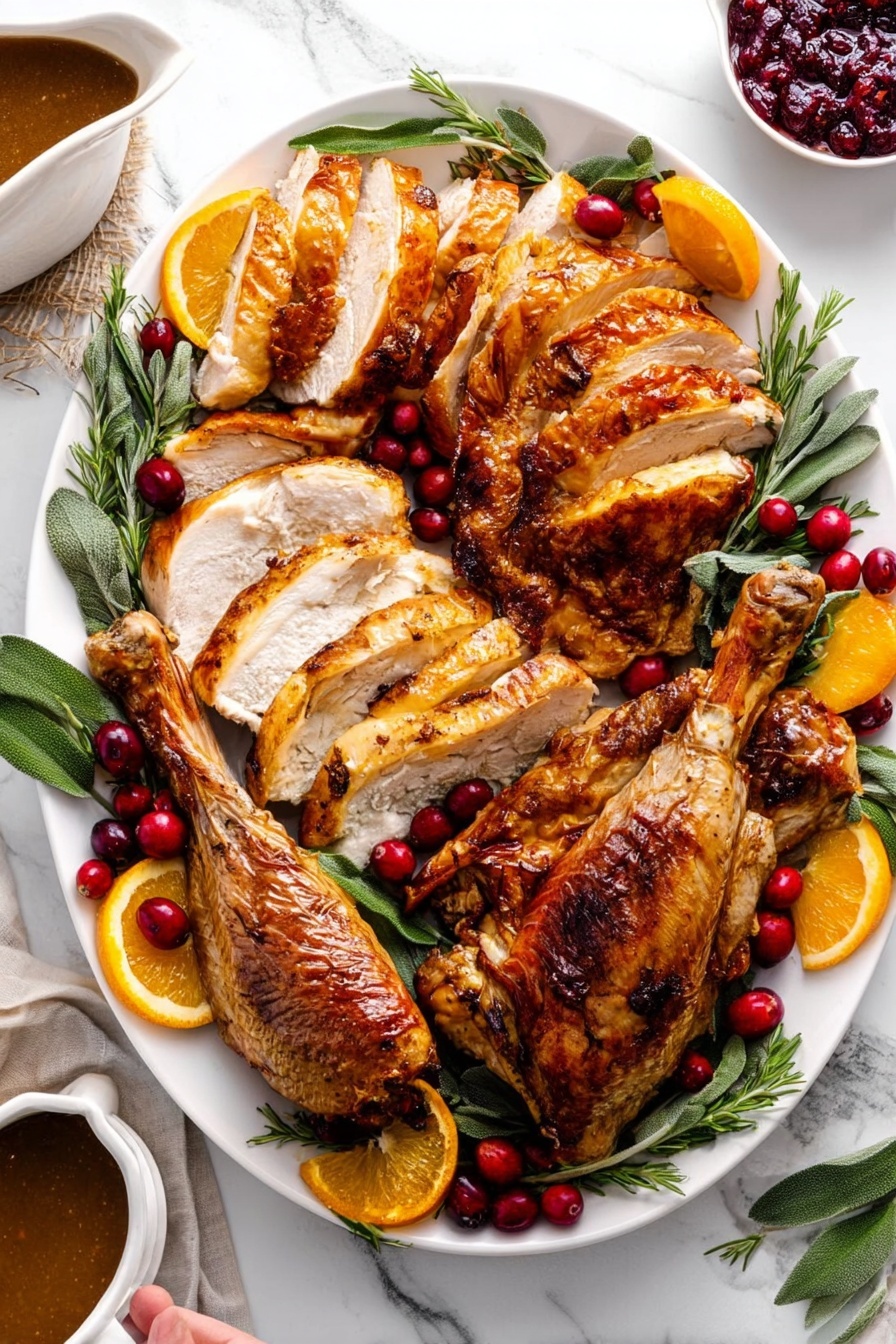
Garnishes
I like to garnish my turkey platter with fresh sprigs of rosemary and thyme—adds a pop of color and a subtle aroma that everyone notices as soon as the bird comes to the table. Sometimes I’ll toss in some fresh cranberries or orange slices for brightness and festive flair.
Side Dishes
My family goes crazy for classic sides like creamy mashed potatoes, roasted Brussels sprouts with garlic, and homemade stuffing. Sweet potato casserole with a crunchy pecan topping pairs beautifully too, complementing the savory turkey flavor.
Creative Ways to Present
For a special occasion, I’ve arranged carved turkey slices on a large rustic wooden board surrounded by roasted veggies and fresh herbs. It makes the meal feel upscale but also encourages mingling as everyone helps themselves. Wrapping individual portions in buttery puff pastry has been a hit for buffet-style dinners, too!
Make Ahead and Storage
Storing Leftovers
After our holiday feast, I usually store leftover turkey slices in an airtight container in the fridge. To keep things tasty, I pour a little leftover gravy over the slices to maintain moisture—works like a charm for sandwich leftovers the next day.
Freezing
I’ve frozen carved turkey with success by layering pieces between parchment paper in a freezer-safe bag. This way, you can grab just what you need. Freeze for up to 2 months and thaw in the fridge overnight before reheating.
Reheating
To reheat without drying out your turkey, I cover it with foil and warm in a 325°F oven for about 20-30 minutes, adding a splash of broth or gravy to keep things juicy. Avoid the microwave if you want to preserve texture and flavor.
FAQs
-
What exactly is a dry brine, and how is it different from a wet brine?
A dry brine uses salt and seasonings rubbed directly on the meat’s surface without any added water, while a wet brine submerges the bird in a saltwater solution. Dry brining results in less mess, easier prep, and often better crisp skin, plus it deeply flavors and tenderizes the turkey just as well as wet brining.
-
Do I have to use kosher salt, or can I use regular table salt?
I highly recommend using kosher salt because its larger flakes make it easier to control saltiness and distribute evenly. Table salt is finer and saltier by volume, so if you use it, reduce the amount significantly to avoid over-salting your turkey.
-
Can I dry brine a frozen turkey?
Dry brining works best with a fully thawed turkey so the salt can penetrate evenly. If your turkey is still frozen, I recommend thawing it completely in the fridge before starting the dry brine to ensure even seasoning and proper food safety.
-
How long can I keep the turkey in the fridge while dry brining?
This recipe suggests anywhere from 24 to 48 hours refrigerated uncovered for optimal flavor and skin crisping. If you brine longer than 24 hours, you can loosely cover the bird with plastic wrap initially, then uncover for the last 24 hours to dry it out for a crispier skin.
-
What’s the best way to ensure my turkey skin crisps up perfectly?
Dry brining helps, but also make sure to refrigerate the uncovered turkey for at least 24 hours so the skin dries out. Before roasting, pat off any excess moisture, rub in butter, and use moderate oven heat. Tent with foil if browning too fast, and you’ll get that golden, crispy skin everyone loves.
Final Thoughts
This Juicy Dry Brine Turkey Recipe has been a game changer in my kitchen—I don’t think I’ll ever go back to wet brining or other complicated methods. It’s simple, hands-off, and reliably delicious, producing a centerpiece that everyone asks for again and again. I encourage you to give it a try next time you’re cooking turkey—you might just find yourself dreaming about turkey day all year long!
Print
Juicy Dry Brine Turkey Recipe
- Prep Time: 30 minutes
- Cook Time: 2 hours 30 minutes
- Total Time: 3 hours
- Yield: 8 servings
- Category: Main Dish
- Method: Roasting
- Cuisine: American
Description
This Dry Brine Turkey recipe delivers a juicy, flavorful turkey with crispy skin, perfect for Thanksgiving or any holiday feast. The dry brining technique enhances the bird’s natural taste and ensures moist meat by allowing the seasoning to penetrate deeply before roasting. Aromatic herbs like thyme and sage, combined with brown sugar and kosher salt, create a balanced seasoning blend that complements the tender turkey. Finished with buttery richness and roasted vegetables, this turkey is sure to impress your guests.
Ingredients
Dry Brine Mix
- ¼ cup (packed) light brown sugar
- 3 tablespoons Morton kosher salt (or ¼ cup Diamond kosher salt)
- 2 teaspoons dried thyme
- 2 teaspoons dried sage leaves or ground sage
- 1 teaspoon freshly ground black pepper
Main Ingredients
- 1 (12 to 14-pound) turkey, patted dry
- 6 tablespoons unsalted butter, at room temperature
- 1 large yellow onion, cut into wedges
- 2 carrots, cut into 2-inch pieces
- 2 stalks celery, cut into 2-inch pieces
Instructions
- Prepare the Turkey: Line a rimmed baking sheet with aluminum foil for easy cleanup and place an oven rack on top. Remove and discard the truss from the turkey legs, cut the skin if needed to release the legs, and trim off excess fat from the neck and cavity. Remove giblets and neck and set aside or discard. Pat the turkey dry thoroughly with paper towels.
- Make and Apply Dry Brine: In a small bowl, combine the brown sugar, kosher salt, thyme, sage, and black pepper. Place the turkey on the prepared rack and rub the dry brine mixture all over the turkey, including inside the cavity. Refrigerate the turkey uncovered for at least 24 hours and up to 48 hours. For longer brining, cover loosely with plastic wrap initially and remove for the final 24 hours to let the skin dry.
- Preheat Oven and Clean Turkey Skin: Preheat the oven to 375°F and set an oven rack in the lower third. Using damp paper towels, gently brush the brine off the turkey’s exterior while keeping the cavity brine intact.
- Prepare Roasting Pan and Turkey: Scatter onion, carrots, and celery in the bottom of a large roasting pan. Place a roasting rack inside the pan and position the turkey on it, tucking wings underneath. Smear the room temperature butter evenly all over the turkey’s surface.
- Roast the Turkey: Roast the turkey until the skin is a deep golden brown and the internal temperature reaches 165°F in the breast and 175°F in the thigh, approximately 1¾ to 2½ hours. Begin checking after 1½ hours and cover with foil if skin browns too quickly.
- Rest the Turkey: Using oven mitts, carefully tilt the turkey to allow juices from the cavity to pour into the roasting pan. Transfer the turkey to a platter or cutting board and tent loosely with foil. Let rest for 20 to 30 minutes. Remove roasted vegetables from the pan and discard or save for serving if still intact. Reserve pan drippings for gravy.
- Make Gravy: Prepare homemade gravy separately while the turkey rests, using the reserved drippings.
- Carve and Serve: Carve the turkey and serve alongside the gravy. Optionally, arrange roasted vegetables on the serving platter.
- Make-Ahead Instructions: Turkey can be roasted and carved ahead if crispy skin is not a priority. Layer gravy in an ovenproof dish, arrange carved turkey on top, cover with plastic wrap, and refrigerate up to two days. Reheat covered in a 325°F oven for 20 to 30 minutes, and warm gravy separately.
Notes
- This method yields juicy meat with crisp skin and a classic holiday flavor.
- Choose a turkey that is not injected, kosher, or self-basting for best dry brine results; if using treated birds, halve the salt to avoid oversalting.
- Use a leave-in digital thermometer to monitor turkey temperature for precise cooking.
- Ensure the turkey stays refrigerated at or below 40°F during brining for food safety.
Nutrition
- Serving Size: 1/8 of turkey
- Calories: 1075
- Sugar: 5 g
- Sodium: 1619 mg
- Fat: 47 g
- Saturated Fat: 15 g
- Unsaturated Fat: 32 g
- Trans Fat: 0 g
- Carbohydrates: 6 g
- Fiber: 0 g
- Protein: 147 g
- Cholesterol: 513 mg