If you’re on the lookout for a show-stopping dinner that’s juicy, crispy, and drenched in mouthwatering flavor, then I’ve got just the thing for you. The Honey Balsamic Roast Duck Recipe I’m sharing today is absolutely fan-freaking-tastic. I remember the first time I tried roasting a duck this way – the skin was perfectly crisp, the meat tender, and the glaze gave it such a beautiful, glossy finish that my guests kept asking for seconds. Stick with me, and I’ll walk you through every step to nail this delicious dish every time.
Why You’ll Love This Recipe
- Perfectly Crispy Skin: The honey balsamic glaze caramelizes beautifully for that irresistible crackle with every bite.
- Juicy, Tender Meat: Roasting low and slow ensures the duck stays moist and full of flavor.
- Simple Ingredient List: You likely have everything you need already in your kitchen.
- Versatile for Occasions: Whether it’s holiday dinner or a weekend special, this roast duck steals the show.

Ingredients You’ll Need
This recipe calls for a handful of ingredients that work harmoniously to highlight the duck’s rich flavor. The honey and balsamic vinegar create a perfect balance of sweet and tangy, while the lemon and garlic give it that extra depth. When shopping, try to pick a fresh, good-quality Pekin duck and organic garlic if you can – these little details make a difference.
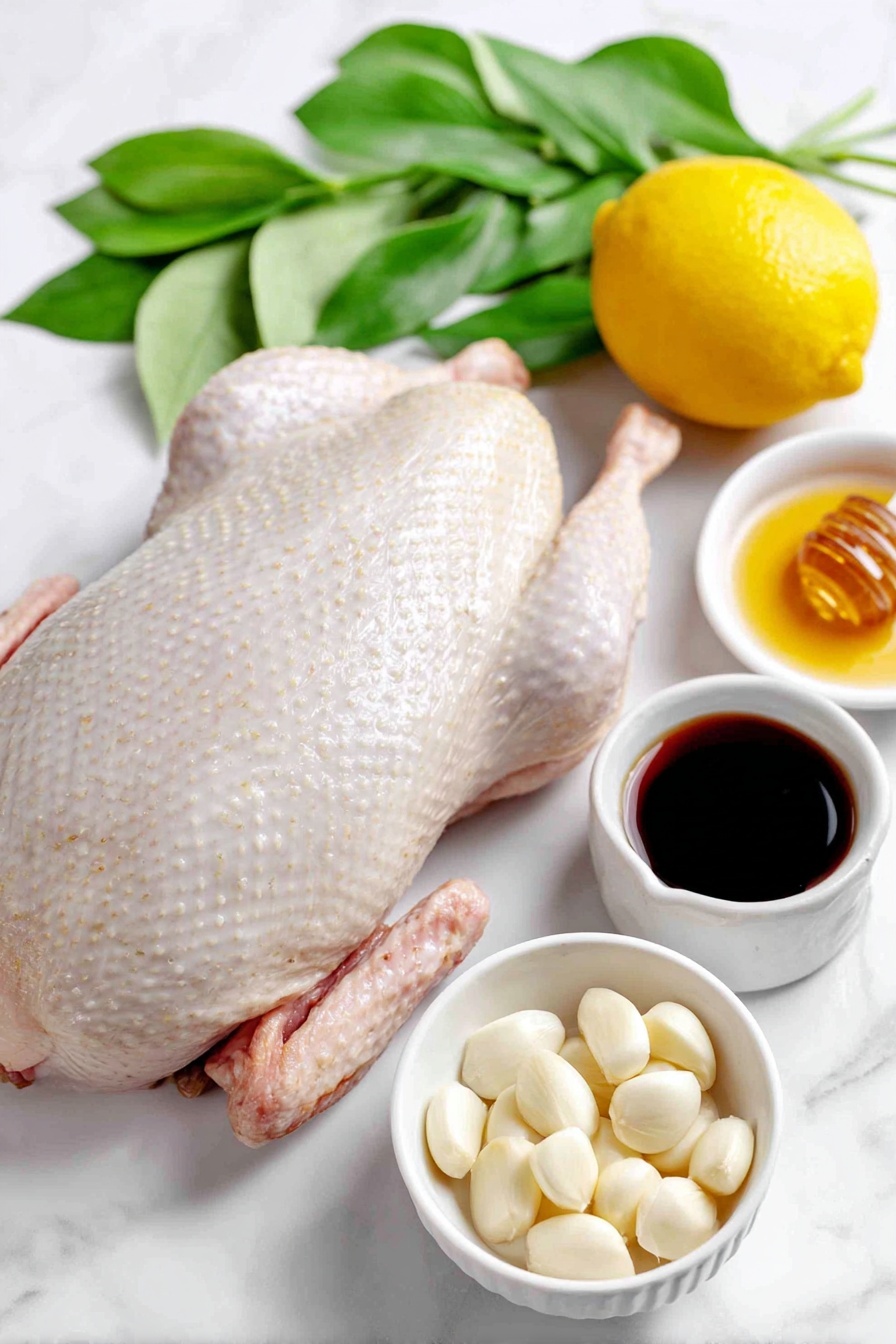
- Pekin Duck: This breed is ideal for roasting due to its tender meat and flavorful fat.
- Salt: Essential for seasoning and helping to crisp up the skin.
- Garlic Cloves: Fresh, chopped garlic gives a robust, aromatic base flavor.
- Lemon (Chopped and Juice): Adds brightness and helps cut through the richness of the duck.
- Balsamic Vinegar: Offers deep, tangy sweetness that complements the honey glaze.
- Honey: Provides that gorgeous caramelized finish and balances the balsamic’s acidity.
Variations
I love how adaptable this Honey Balsamic Roast Duck Recipe can be. Whether you’re looking to tweak seasonings, cater to dietary needs, or add a seasonal touch, you’ll find plenty of ways to make this uniquely yours. Feel free to experiment!
- Herb Infused: I sometimes tuck fresh thyme or rosemary inside the duck cavity for an herbaceous aroma that pairs wonderfully with the glaze.
- Spicy Kick: Adding a pinch of chili flakes to the glaze gives it a subtle heat that my family goes crazy for.
- Gluten-Free: This recipe is naturally gluten-free, just double-check your balsamic vinegar label to be sure.
- Seasonal Fruits: During fall, I like to add some chopped apples or figs in the roasting pan to add sweetness and flavor to the drippings.
How to Make Honey Balsamic Roast Duck Recipe
Step 1: Prep Your Duck for Maximum Crispiness
Start by removing any excess fat from the duck’s cavity and pat the skin dry with paper towels—this little step is the secret to crispy skin. Then, season generously with salt inside and out. I like to massage the salt while rubbing in chopped garlic and chopped lemon pieces under the skin or inside the cavity for an infusion of fresh aroma. Don’t rush this prep—it makes all the difference!
Step 2: Roast the Duck Low and Slow
Place the duck breast-side up on a rack in your roasting pan so that the fat can drip away. Roast at about 325°F (160°C) for 3 hours. Yes, it’s a bit of a wait, but this slow roasting is what keeps the meat juicy while rendering out the fat. Every hour or so, I spoon out the fat from the pan—it’s incredible rendered duck fat that you can save for cooking later!
Step 3: Glaze and Crisp to Perfection
In the final 30 minutes, mix your balsamic vinegar, honey, and freshly squeezed lemon juice. Brush this gorgeous glaze all over the duck every 10 minutes. This layering creates a deep, caramelized crust that is simply irresistible. Keep an eye on it so the glaze doesn’t burn – a little caramelized char adds flavor, but you want to avoid bitterness.
Step 4: Rest and Serve
Once done, let your duck rest for about 15 minutes before carving. This resting time lets the juices redistribute, ensuring every bite is tender and flavorful. Trust me, it’s tempting to dive right in, but patience pays off here.
Pro Tips for Making Honey Balsamic Roast Duck Recipe
- Dry Skin is Key: Pat your duck skin super dry—this is the golden rule I learned after fumbling with soggy skin on my first tries.
- Save Rendered Fat: The duck fat you collect can be stored and used later for roasting vegetables—game changer!
- Glaze with Patience: Don’t just slap the glaze on once; multiple thin layers develop a beautiful, sticky crust.
- Avoid Burning: Keep the oven temperature moderate to prevent the honey from scorching and becoming bitter.
How to Serve Honey Balsamic Roast Duck Recipe
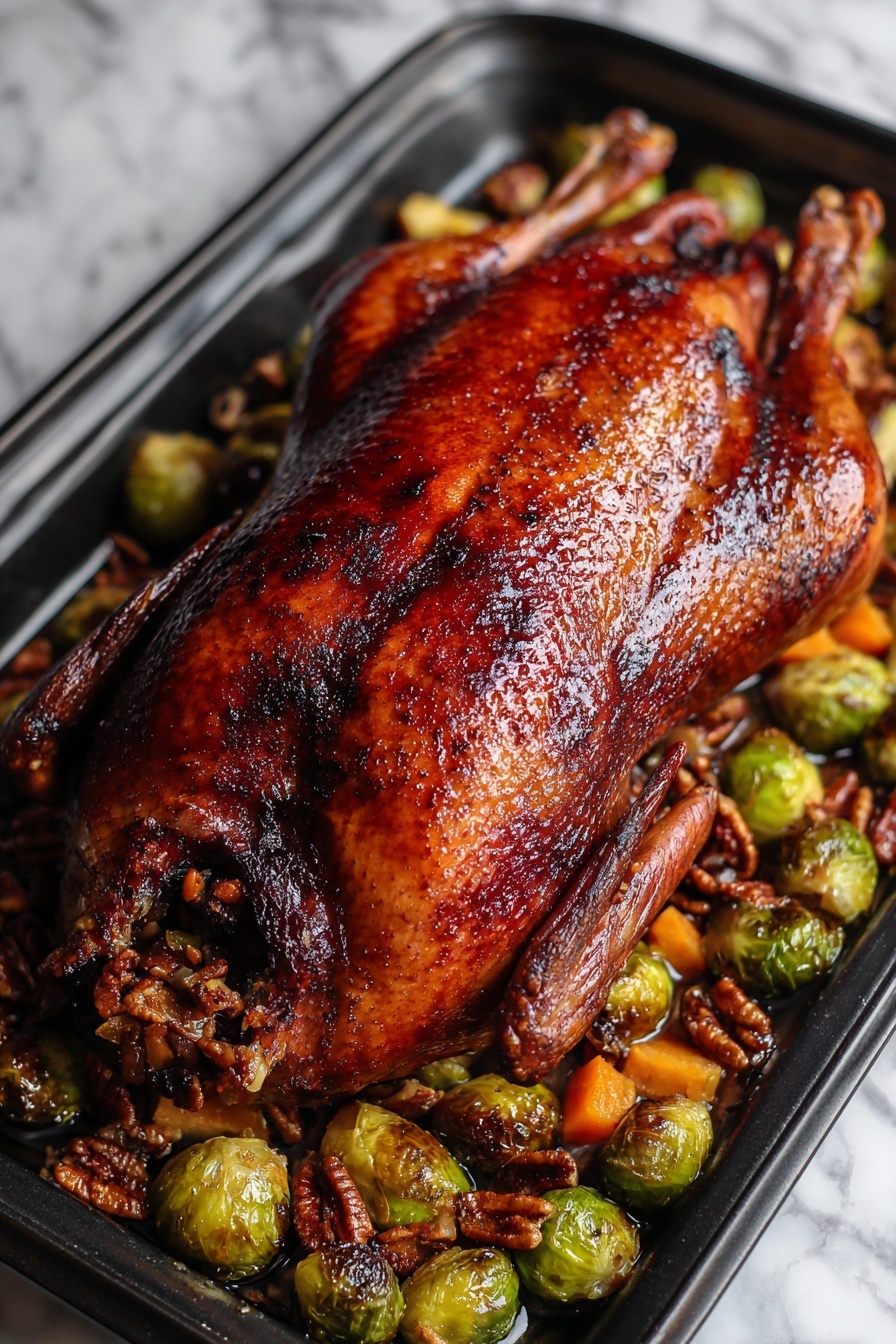
Garnishes
I like to garnish the duck with fresh rosemary sprigs and a few thin lemon slices. It not only looks stunning but also adds a subtle fragrance that pairs beautifully with the glaze. A sprinkle of freshly cracked black pepper before serving never hurts, either!
Side Dishes
My go-to sides with this Honey Balsamic Roast Duck Recipe are roasted Brussels sprouts tossed in some of the saved duck fat and creamy mashed potatoes. The richness of the potatoes and the earthy sprouts balance the sweet and tangy duck perfectly. For something lighter, a crisp green salad dressed with lemon vinaigrette rounds it out nicely.
Creative Ways to Present
For special occasions, I enjoy serving the duck carved on a large wooden board surrounded by roasted baby vegetables and fresh herbs. It makes for a rustic, inviting presentation that gets guests talking. Sometimes I drizzle a little extra glaze over the sliced meat right before plating—it adds that wow factor every time.
Make Ahead and Storage
Storing Leftovers
Leftover duck stores beautifully in an airtight container for up to 3 days in the fridge. I always separate the meat from the crispy skin to maintain the best texture. Reheat gently to avoid drying out the meat.
Freezing
If you’ve made a large duck and want to freeze leftovers, wrap portions tightly with plastic wrap and foil, and freeze for up to 2 months. When you thaw it in the fridge overnight, you’ll find it still tastes fresh and delicious.
Reheating
I recommend reheating leftover duck gently in a low oven (around 300°F) covered loosely with foil to keep moisture, then remove the foil for the last 5-10 minutes to crisp up the skin again – it’s the best way to revive that fresh-from-the-oven feeling.
FAQs
-
Can I use a different type of duck for this recipe?
While Pekin duck is ideal for roasting because of its balance of fat and tenderness, you can use other varieties like Muscovy, but keep in mind they might have a stronger flavor or different cooking times. Adjust accordingly and watch the internal temperature for doneness.
-
How do I know when the duck is fully cooked?
Use a meat thermometer inserted into the thickest part of the duck (avoiding bone). The safe internal temperature is 165°F (74°C). The meat will also be tender and juices should run clear when pierced.
-
Can I make the honey balsamic glaze ahead of time?
Absolutely! You can prepare the glaze up to 2 days in advance and store it in the fridge. Just give it a good stir or slight warm-up before glazing the duck during roasting.
-
What if I don’t have balsamic vinegar?
You can substitute with red wine vinegar mixed with a touch of sugar or maple syrup to mimic that sweet-tart flavor, but balsamic is preferred for its depth and richness.
Final Thoughts
This Honey Balsamic Roast Duck Recipe has truly become one of my favorite dishes to make when I want to impress without stressing. Its beautiful balance of flavors, the crispy skin, and the juicy meat always get compliments (and sometimes even requests for the recipe). I hope you enjoy making and sharing it as much as I do—it’s the kind of meal that brings everyone around the table and creates lasting memories. Give it a try, and don’t forget to savor every bite!
Print
Honey Balsamic Roast Duck Recipe
- Prep Time: 20 min
- Cook Time: 180 min
- Total Time: 200 min
- Yield: 6 servings
- Category: Main Course
- Method: Baking
- Cuisine: American
Description
This Roast Duck recipe delivers a beautifully roasted whole Pekin duck with juicy meat and crispy skin, enhanced by a sweet and tangy honey-balsamic glaze. It’s a perfect centerpiece for special occasions like Thanksgiving, Christmas, or New Year’s Eve, boasting rich flavors and an impressive presentation.
Ingredients
Main Ingredients
- 6 lb whole Pekin duck
- Salt, to taste
- 5 garlic cloves, chopped
- 1 lemon, small or medium, chopped
- 1/2 cup balsamic vinegar
- 1 lemon, freshly squeezed juice
- 1/4 cup honey
Instructions
- Prepare the Duck: Rinse the whole Pekin duck under cold water and pat dry thoroughly with paper towels. Remove any excess fat from the cavity and prick the skin all over with a fork or skewer to help the fat render during roasting.
- Season and Stuff: Generously salt the duck inside and out. Stuff the cavity with the chopped garlic and chopped lemon pieces to infuse flavor during roasting.
- Make the Glaze: In a small bowl, combine the balsamic vinegar, freshly squeezed lemon juice, and honey. Stir well until fully blended to create a smooth glaze.
- Preheat Oven and Roast: Preheat your oven to 325°F (160°C). Place the duck breast-side up on a rack in a roasting pan to allow air circulation underneath and fat drainage.
- Initial Roasting: Roast the duck for about 2 hours, basting every 30 minutes with the honey-balsamic glaze to develop a rich, caramelized coating.
- Increase Temperature for Crisping: Increase the oven temperature to 425°F (220°C) and continue roasting the duck for an additional 20-30 minutes to crisp the skin, basting once more with the glaze during the last basting.
- Rest the Duck: Remove the duck from the oven and let it rest for at least 15 minutes before carving. This allows the juices to redistribute, ensuring moist meat.
- Serve: Carve the duck and serve with your favorite side dishes. The glossy honey-balsamic skin and aromatic meat will be the highlight of your meal.
Notes
- This detailed recipe includes step-by-step photos to guide you through roasting a whole duck in the oven successfully.
- The honey-balsamic glaze creates a beautiful roasted look and adds a perfect balance of sweetness and tang.
- Ideal as a main dish for special occasions and holidays like Thanksgiving, Christmas, and New Year’s Eve.
- Ensure the duck skin is thoroughly dried before roasting to achieve maximum crispiness.
- Pricking the skin before roasting helps render out excess fat, leading to a lighter, crispier skin.
Nutrition
- Serving Size: 1 serving
- Calories: 2862 kcal
- Sugar: 23 g
- Sodium: 438 mg
- Fat: 267 g
- Saturated Fat: 89 g
- Unsaturated Fat: 178 g
- Trans Fat: 0 g
- Carbohydrates: 29 g
- Fiber: 1 g
- Protein: 79 g
- Cholesterol: 517 mg