

If you love warm spices and chocolatey treats, then get ready to fall head over heels for this German Lebkuchen Cookies with Chocolate Glaze Recipe. These traditional Elisenlebkuchen are a Christmas classic in Germany, and I promise you, the rich flavors and tender texture will have your family asking for seconds (and thirds!). I absolutely love how this recipe balances the nutty almond and hazelnut flours with fragrant Lebkuchengewürz and a luscious chocolate glaze. Stick with me—I’ll walk you through every step so your kitchen fills with that cozy holiday scent, and your cookies come out just right.
Why You’ll Love This Recipe
- Authentic Flavor: The combination of almond, hazelnut, and homemade Lebkuchengewürz brings you true German tradition right in your kitchen.
- Perfectly Balanced Sweetness: The hint of candied lemon and orange peel keeps the sweetness vibrant without being overpowering.
- Versatile Glazing Options: Choose between the rich chocolate glaze or a simple sugar glaze for different textures and tastes.
- Made-Ahead Friendly: These cookies store perfectly and actually develop deeper flavor over time, making them ideal for holiday prep.

Ingredients You’ll Need
The magic of these German Lebkuchen Cookies with Chocolate Glaze Recipe really comes from the quality of the ingredients. I always recommend using fresh almond and hazelnut flours and spending a little extra time making your own Lebkuchengewürz and candied peels—it’s totally worth it for that authentic aroma and flavor.

- Eggs: I suggest using large eggs at room temperature for best mixing and texture.
- Brown Sugar: Packed brown sugar brings moisture and richness; avoid substituting with white sugar.
- Honey: Adds depth and helps with that soft chewiness characteristic of lebkuchen.
- Vanilla Extract: Use pure vanilla for the best flavor boost.
- Almond Flour: Provides nutty sweetness and a tender crumb; finely ground is key.
- Hazelnut Flour: Compliments almond flour perfectly for that classic lebkuchen vibe.
- Salt: Just a small pinch to enhance all those sweet spices.
- Baking Powder: Helps give a gentle lift without making the cookies cakey.
- Lebkuchengewürz: The star spice blend—again, homemade is highly recommended for authenticity.
- Candied Lemon and Orange Peel: Finely minced to add zesty bursts of flavor and texture.
- All-Purpose Flour: Used lightly to toss the candied peel and, if needed, adjust dough consistency.
- Backoblaten or Communion Wafers: These thin wafers prevent sticking and give traditional structure.
- Blanched Almonds: Cut in half lengthwise for decoration—it’s a charming finishing touch I love.
- Dark or Milk Chocolate: Use quality chocolate for the glaze; tastes so much better than chocolate chips.
- Coconut Oil: Helps the chocolate glaze set smoothly; you can swap with other neutral oils but avoid butter.
- Powdered Sugar and Water (for Sugar Glaze): Simple and sweet alternative glaze option that’s quick and light.
Variations
I love playing around with this recipe to suit different tastes or dietary needs. Maybe you want a gluten-free option, or prefer a more citrus-forward cookie. The beauty of German Lebkuchen Cookies with Chocolate Glaze Recipe is its flexibility—so don’t be shy about customizing!
- Gluten-Free Version: Using gluten-free flour to toss the candied peels works perfectly, making the whole cookie gluten-free without sacrificing texture.
- All-Almond Nut Flour: If you can’t find hazelnut flour, swapping it entirely with almond flour still tastes amazing, though it’s a bit less traditional.
- Spice Levels: Feel free to adjust the amount of Lebkuchengewürz to make the cookies more or less spiced depending on your family’s preference—I usually add an extra teaspoon for my spice lovers.
- Glazing Options: Have fun mixing it up—chocolate glaze adds richness, while sugar glaze keeps it light and bright; I sometimes do half and half for variety at parties.
How to Make German Lebkuchen Cookies with Chocolate Glaze Recipe
Step 1: Prep Your Candied Peels and Oven
Start by preheating your oven to 300°F (about 150°C). Toss the candied lemon and orange peel with a little all-purpose flour to prevent them from sticking, then pulse them in a food processor until they’re finely minced. This step helps distribute tiny bursts of citrus flavor evenly throughout your cookies, which is a trick I picked up when I first tried making lebkuchen—it makes all the difference!
Step 2: Mix Up the Batter
In a large bowl, beat the eggs until foamy to get some lightness going. Then add the brown sugar, honey, and vanilla extract, mixing until everything’s smooth and combined. Next, stir in the almond flour, hazelnut flour, salt, baking powder, Lebkuchengewürz, and your minced candied peels. I like to use my stand mixer with the paddle attachment here—that way I get consistent mixing for about two minutes, and the dough comes together just right. The batter will be wet, almost sticky, but if it feels too thin to scoop, simply add a little more almond or hazelnut flour. Remember, a thick yet scoopable batter is key for shaping over the wafers.
Step 3: Shape and Bake on Wafers
Spoon the dough onto your Backoblaten or communion wafers, smoothing the tops gently with a spatula or your finger. Leave a tiny space around the edges so they don’t spread too far while baking. Arrange them on a baking sheet lined with parchment. Pop them in the oven on the middle rack for 25 to 30 minutes. Keep an eye on them—the edges should be just firm but not browned. Once done, remove the tray and let the lebkuchen cool completely before moving to glazing. Patience is tough here, but it’s worth it for that perfect texture!
Step 4: Dip and Decorate
While the cookies cool, melt your chocolate with coconut oil in the microwave for short bursts, stirring frequently to avoid scorch. For the sugar glaze, mix powdered sugar with water or milk until smooth. Now the fun part: dip half of your cookies into the chocolate glaze, letting excess drip off, and dip the other half into the sugar glaze. Place them on a wire rack set over a cookie sheet to catch drips. Quickly arrange three almond halves on top of each cookie; this little decoration is classic and adds crunch. Let the glaze harden completely, usually about an hour at room temperature, before storing.
Pro Tips for Making German Lebkuchen Cookies with Chocolate Glaze Recipe
- Use Fresh Nut Flours: I learned that using freshly ground almond and hazelnut flours makes the texture moist and crumbly, unlike store-bought prepackaged ones.
- Don’t Skip Homemade Lebkuchengewürz: Making your own spice blend elevates the flavor beautifully; it’s a bit of extra work but pays off.
- Control Dough Consistency: If your batter is too runny, add extra nut flour incrementally—too thin batter is the biggest baking mishap I’ve faced here.
- Glazing Timing Matters: Always glaze when the cookies are fully cooled to prevent melting or smudging the chocolate or sugar coating.
How to Serve German Lebkuchen Cookies with Chocolate Glaze Recipe

Garnishes
I stick with the traditional three almond halves on each cookie because they look adorable and add just the right crunch contrast. Sometimes, for holiday parties, I sprinkle edible gold dust on the chocolate glaze to make them extra festive—it’s a little touch that impresses everyone.
Side Dishes
These lebkuchen pair beautifully with a steaming mug of mulled wine or hot spiced cider. I also love serving them alongside creamy eggnog or simple black coffee for a cozy afternoon treat with friends or family.
Creative Ways to Present
For special occasions, I arrange these cookies on a rustic wooden board with fresh pine sprigs and cinnamon sticks, adding a few sugared cranberries for color. You can also stack them in pretty gift boxes with parchment paper to share with loved ones—nothing says holiday spirit like handmade delicacies!
Make Ahead and Storage
Storing Leftovers
I store these cookies in an airtight container at room temperature. The flavors actually improve after a day or two, so I recommend making them a little ahead of when you plan to serve. They keep wonderfully for several weeks if stored well, so don’t worry if you bake a big batch.
Freezing
If you want to freeze them, I wrap each cookie individually in parchment paper and place them in a sealed freezer bag. From my experience, they thaw quickly at room temp and retain that lovely chewy texture after freezing.
Reheating
I usually enjoy these lebkuchen at room temperature, but if you want to refresh them, a quick 5-minute warm-up in a low oven (about 250°F) helps soften them without melting the glaze. Just watch closely to avoid drying them out!
FAQs
-
What is the difference between Lebkuchen and gingerbread cookies?
Lebkuchen are traditional German cookies that often include nuts (like almonds and hazelnuts), candied citrus peel, and a unique spice blend called Lebkuchengewürz, giving them a moist and chewy texture. Gingerbread cookies, by contrast, typically rely on ginger as the main spice and have a firmer, crisper texture. Both are delicious, but lebkuchen offer a more complex flavor profile.
-
Can I make the Lebkuchen batter ahead of time?
It’s best to bake the batter fresh for optimal texture, but you can prepare it up to a day ahead and keep it covered in the fridge. Just give it a gentle stir before scooping onto the wafers. Longer storage can affect the rise and moisture.
-
Do I have to use Backoblaten wafers?
Backoblaten wafers are traditional and help keep the cookies from sticking and spreading during baking, maintaining their classic shape. If you don’t have them, white communion wafers work well as a substitute. You can also try baking without wafers, but be aware the cookies will spread more and be less traditional in texture.
-
How long do these cookies keep?
Stored properly in an airtight container at room temperature, German Lebkuchen Cookies with Chocolate Glaze stay fresh for several weeks and actually develop richer flavors over time. Just be sure they’re completely cooled and the glaze is set before storing.
-
Can I substitute the candied peels with dried fruit?
You could experiment with finely chopped dried apricots or cherries, but the bright, zesty flavor of the candied lemon and orange peel is a signature component of lebkuchen. If you skip them, the cookies will lack some of their traditional brightness.
Final Thoughts
This German Lebkuchen Cookies with Chocolate Glaze Recipe holds a special place in my heart because it brings so much holiday warmth and nostalgia into the kitchen. I remember sharing these with my family, sipping cocoa, and listening to carols, making memories that last a lifetime. Once you try this recipe, I’m sure you’ll be baking these beauties every season and maybe even gifting them to friends. Trust me—there’s nothing quite like the smell of fresh lebkuchen wafting through your home to make everything feel just right.
Print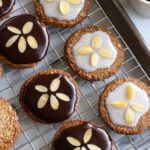
German Lebkuchen Cookies with Chocolate Glaze Recipe
- Prep Time: 20 minutes
- Cook Time: 25-30 minutes
- Total Time: 45-50 minutes
- Yield: 35 Lebkuchen using 70mm Backoblaten or 25 using 90mm Backoblaten
- Category: Dessert
- Method: Baking
- Cuisine: German
- Diet: Gluten Free
Description
Authentic German Lebkuchen, also known as Elisenlebkuchen, are traditional soft gingerbread cookies bursting with flavors of spices, citrus peel, nuts, and honey. Perfect for Christmas, these moist and aromatic treats are baked on communion wafers or Backoblaten and finished with either a rich chocolate glaze or a simple sugar glaze, decorated with almonds for the quintessential festive touch.
Ingredients
Wet Ingredients
- 5 large eggs
- 1 1/4 cup packed brown sugar
- 1/4 cup honey
- 1 teaspoon quality pure vanilla extract
Dry Ingredients
- 2 cups almond flour
- 2 cups hazelnut flour
- 1/4 teaspoon salt
- 1/2 teaspoon baking powder
- 3 teaspoons Lebkuchengewürz (German spice mix)
- 1/4 cup all-purpose flour (to coat candied peel; gluten free flour can be substituted)
Candied Peels
- 4 ounces candied lemon peel
- 4 ounces candied orange peel
Base
- Backoblaten (either 70mm or 90mm) or white communion wafers (substitute for Backoblaten)
Decoration
- Blanched whole almonds cut in half lengthwise
Chocolate Glaze
- 3 ounces quality dark or milk chocolate
- 2 teaspoons coconut oil (or oil of choice; do not use butter)
Sugar Glaze
- 1 cup sifted powdered sugar
- 3 tablespoons water or milk
Instructions
- Preheat the oven: Set your oven to 300 degrees Fahrenheit (about 150 degrees Celsius) and allow it to reach temperature for even baking.
- Prepare candied peels: Toss the candied lemon and orange peels with approximately 1/4 cup all-purpose flour to prevent sticking, then pulse them in a food processor until finely minced. Set aside this aromatic mixture for incorporation into the dough.
- Mix wet ingredients: In a large mixing bowl, beat the eggs until foamy. Add the brown sugar, honey, and vanilla extract, continuing to beat until the mixture is fully combined and smooth.
- Combine dry ingredients and mix dough: Add almond flour, hazelnut flour, salt, baking powder, Lebkuchengewürz, and the processed candied peels to the wet mixture. Stir vigorously or use a stand mixer with paddle attachment to beat for about 2 minutes until thoroughly combined. The dough should be moist but scoopable; if too thin, add a bit more almond or hazelnut flour.
- Shape Lebkuchen on wafers: Scoop portions of the mixture onto each Backoblaten or communion wafer, smoothing the tops and leaving a slight margin around the edges. Arrange these on a cookie sheet lined with parchment paper or a silicone baking mat.
- Bake: Place the cookie sheet on the middle rack and bake for 25-30 minutes until the Lebkuchen are set and lightly firm to touch. Remove from oven and allow to cool completely on the sheet.
- Prepare glazes: For the chocolate glaze, melt the chocolate with coconut oil in a microwave-safe bowl, heating in short bursts and stirring to smoothness. For the sugar glaze, stir sifted powdered sugar with water or milk until smooth and pourable.
- Glazing and decoration: Set a wire rack over a cookie sheet to catch drips. Dip half of the cooled Lebkuchen halfway into the chocolate glaze and the other half into the sugar glaze, letting excess drip off. Return each glazed cookie to the wire rack. While still wet, press three almond halves onto each cookie for decoration.
- Dry: Allow the glazes to fully harden and the Lebkuchen to dry before storing.
- Storage: Store in an airtight container. These cookies keep for several weeks and their flavor improves as they age.
Notes
- Lebkuchen, especially Elisenlebkuchen, are one of Germany’s most cherished Christmas treats, known for their unique spice blend and tender texture.
- Using homemade Lebkuchengewürz and candied peels will greatly enhance authenticity and flavor.
- Backoblaten or communion wafers provide the traditional base and help prevent sticking while baking.
- Adjust nut flour ratios slightly if the dough consistency requires thickening.
- Decorate with almonds while glaze is wet for a classic appearance.
- The recipe yields about 35 Lebkuchen using smaller 70mm wafers or about 25 if using larger 90mm wafers.
- Store in airtight containers; the cookies become more flavorful after a day or two as the spices meld.
Nutrition
- Serving Size: 1 elisenlebkuchen
- Calories: 175 kcal
- Sugar: 19 g
- Sodium: 34 mg
- Fat: 9 g
- Saturated Fat: 1 g
- Unsaturated Fat: 8 g
- Trans Fat: 0 g
- Carbohydrates: 22 g
- Fiber: 1 g
- Protein: 3 g
- Cholesterol: 23 mg