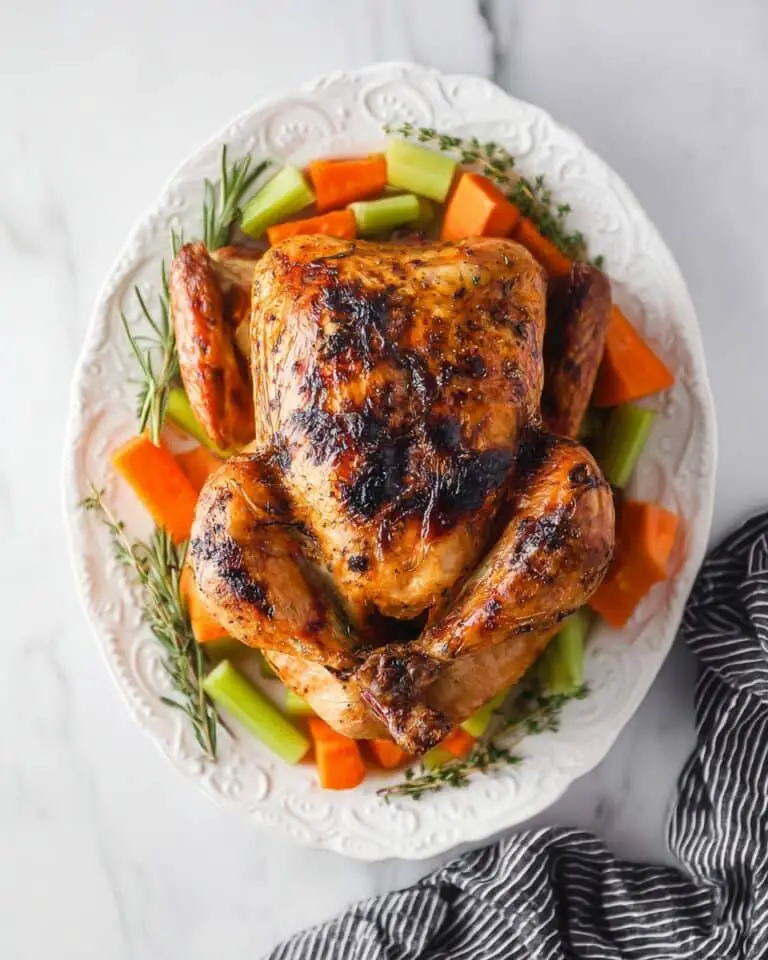

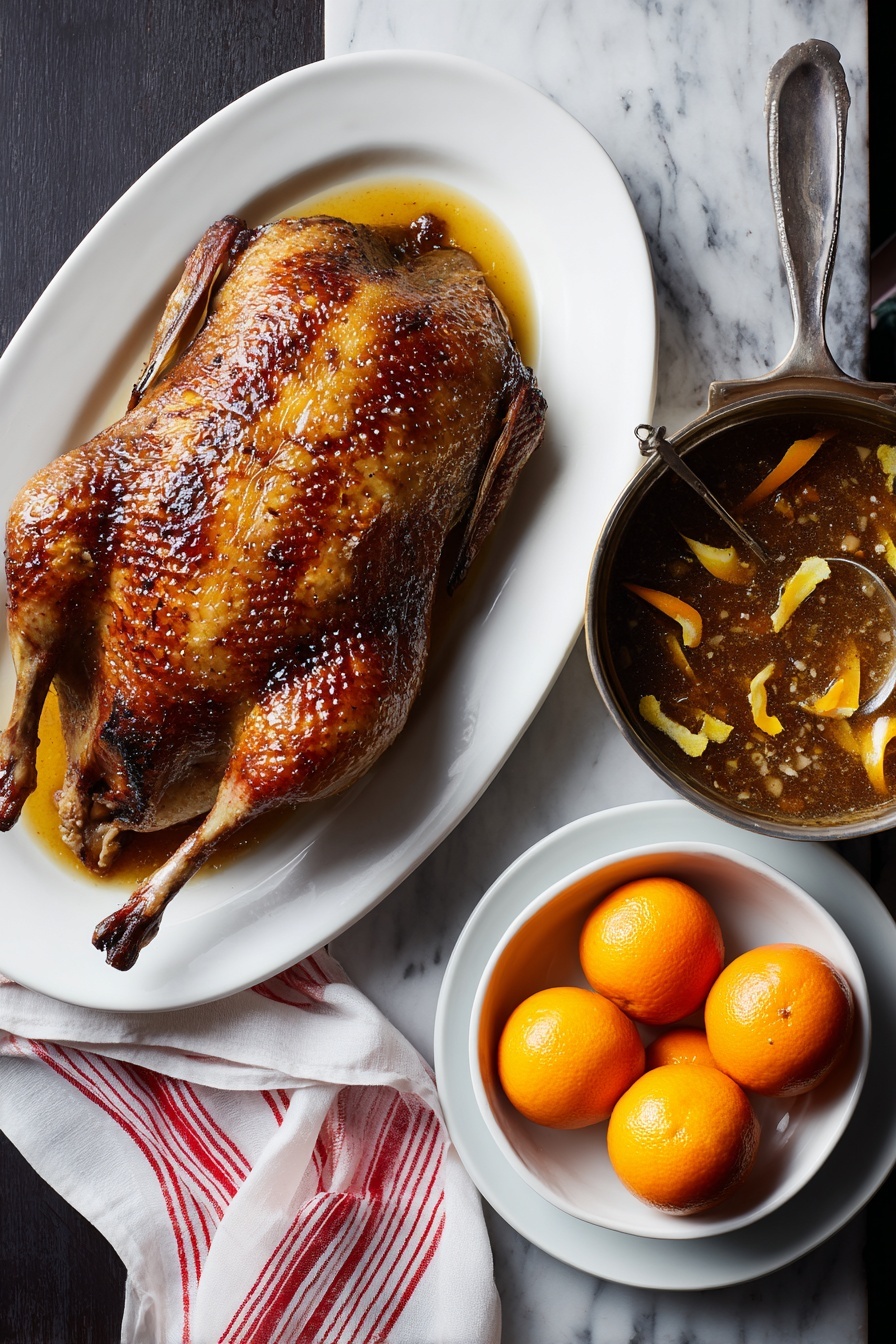
If you’re looking for a show-stopping dish that’s elegant yet surprisingly approachable, you’re going to love this Duck à l’Orange with Savory Sauce Recipe. I absolutely love how the crispy duck skin pairs with the tangy, sweet orange sauce that has just the right amount of savory depth. When I first tried making duck à l’orange, I was intimidated by the complicated steps, but this recipe breaks it down so you can nail it at home—trust me, your family and friends will go crazy for it!
Why You’ll Love This Recipe
- Perfect Balance of Flavors: The sauce walks a fine line between sweet, tangy, and savory, perfectly cutting through the richness of the duck.
- Crispy Skin Every Time: Pricking the skin and roasting at high heat ensures that crackly duck skin we all love.
- Impress Without Stress: Step-by-step instructions make a classic French dish achievable for home cooks.
- Versatile Sauce: Leftover orange gastrique is great for drizzling on veggies or grilled meats, so nothing goes to waste.

Ingredients You’ll Need
All the ingredients in this Duck à l’Orange with Savory Sauce Recipe come together to build layers of flavor—from the hearty stock base to the fresh citrus zing. Make sure to grab a whole duck with good skin quality and fresh oranges for the brightest sauce. If you can find bitter oranges, that’s the traditional choice, but navel oranges work wonderfully too.
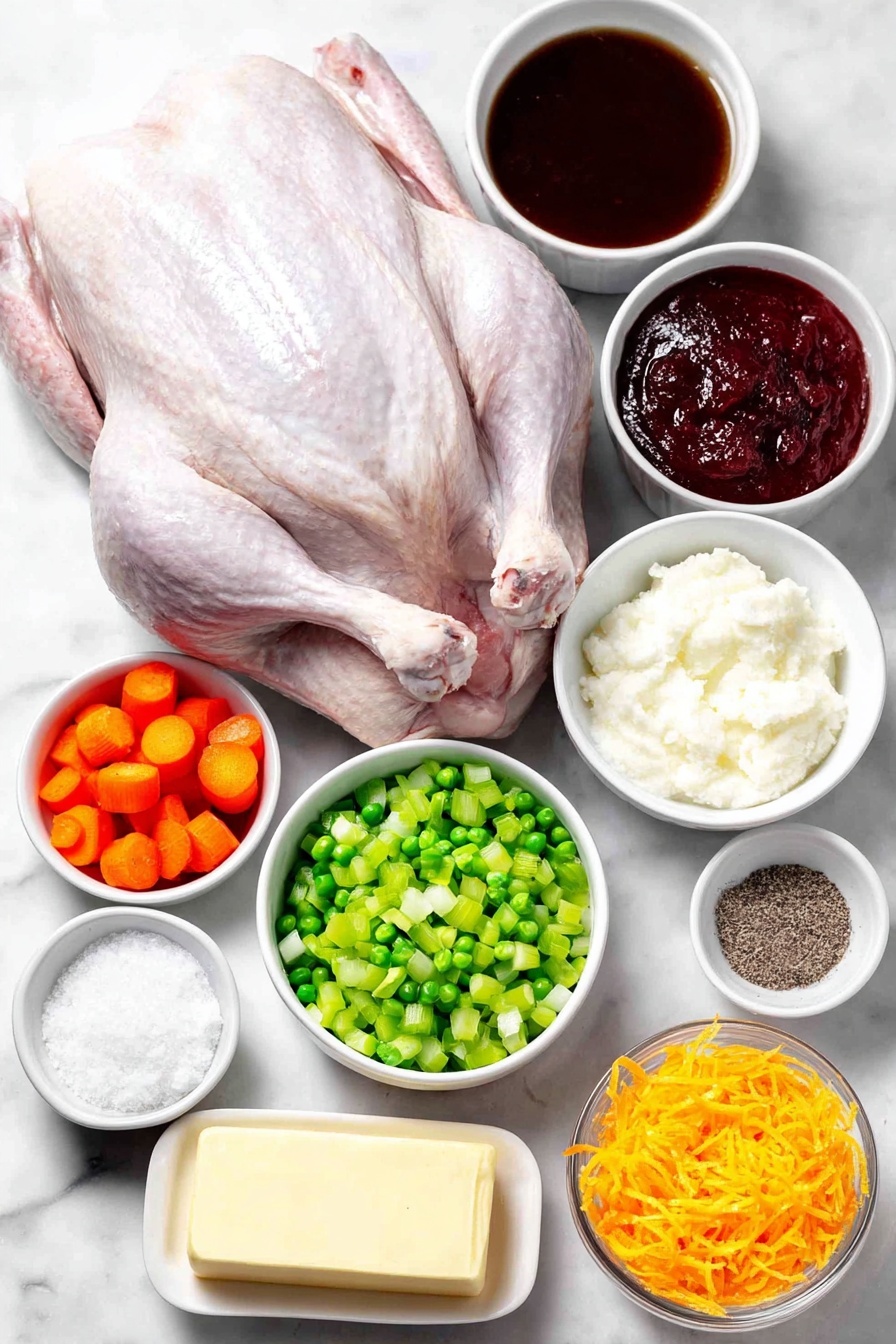
- Whole Duck: About 5 pounds, look for fresh with firm skin; this is the star of the show.
- Vegetable Oil: For light coating, helps with roasting the duck trimmings and veggies.
- Kosher Salt: Essential for seasoning and drawing moisture for crisp skin.
- Carrot, Onion & Celery (Mirepoix): Classic base for your sauce stock, adds depth and sweetness.
- Brown Beef or Chicken Stock: Homemade or high quality store-bought; key for rich sauce.
- Tomato Paste (Optional): Adds color and umami to your sauce stock.
- Granulated Sugar: For caramelizing and balancing the savory flavors.
- Red Wine Vinegar: Provides acidity in the gastrique, balancing sweetness.
- Orange Zest and Juice (Navel or Bitter): Fresh zest plus juice gives that signature bright citrus punch.
- Lemon Juice: Adds extra sharpness unless you’re using bitter orange juice, which covers this.
- Freshly Ground Pepper: For seasoning and slight heat.
- Cold Unsalted Butter: Stirred in at the end for a silky finish.
- Cornstarch or Arrowroot (Optional): Only if your sauce needs thickening; handy to keep on hand.
Variations
I like to tailor this Duck à l’Orange with Savory Sauce Recipe depending on the occasion or what’s in season. Feel free to experiment with types of citrus or adapt the sauce for dietary needs. This recipe’s flexibility is one of my favorite things about it.
- Use Blood Oranges: I once swapped in blood orange juice and zest for a beautiful red hue and slightly deeper flavor that wowed my dinner guests.
- Make It Gluten-Free: The recipe is naturally gluten-free; just confirm your stock and vinegar are free from additives.
- Braise Instead of Roast: For a slower, hands-off method, braise the duck with the aromatics and finish with the sauce—but roasting gives that unbeatable crispy skin.
- Add Fresh Herbs: Thyme or rosemary in the roasting pan enhances the sauce’s earthiness, which I love on colder days.
How to Make Duck à l’Orange with Savory Sauce Recipe
Step 1: Prepare Your Duck for Crispy Skin
Start by trimming any excess skin around the neck and cavity, then remove the wing tips but leave the drumettes on. I like to spatchcock my duck to help it cook evenly and crisp up all over. To spatchcock, simply cut out the backbone with poultry shears and press the bird flat—this makes roasting faster and the skin crispier.
Next, prick the skin all over with a sharp paring knife—don’t cut into the meat, just pierce the skin to allow fat to render as it cooks. Then, dip the duck briefly in boiling water for about 2 minutes to tighten the skin. Season generously with kosher salt inside and out, and refrigerate uncovered for at least an hour to dry out the skin. This little trick ensures that unbeatable crackle I crave.
Step 2: Roast Duck Trimmings and Build Your Sauce Base
Place your trimmed duck wings, neck, and backbone (if you’ve spatchcocked) on a rimmed baking sheet with diced carrot, onion, and celery. Drizzle lightly with vegetable oil and rub everything together. I sometimes spread a little tomato paste on the duck and veggies here—it deepens the color and adds extra savoriness to the sauce stock.
Roast these trimmings at 425°F (220°C) for about 25 minutes, stirring a few times until everything’s nicely browned but not burnt. Don’t rush this step; those caramelized bits add incredible richness and flavor to your sauce.
Step 3: Simmer Stock and Reduce for Intense Flavor
Transfer the roasted trimmings and veggies to a large saucepan with your brown beef or chicken stock—homemade stock shines here! Pour a bit of boiling water over the baking sheet and scrape up those lovely browned bits, adding that liquid to your pan too.
Simmer gently for 1 to 2 hours, skimming off any scum or fat that rises. This slow reduction concentrates flavors perfectly. Afterwards, strain out solids and continue simmering the stock until you’re left with about a cup; this intense reduction will form the backbone of your sauce.
Step 4: Roast the Duck to Perfection
Now increase your oven to 450°F (230°C) and roast the duck on the wire rack for 30 minutes—this high heat crisping can get smoky, so open a window if needed. Then reduce the oven to 300°F (150°C) to finish cooking the duck until an instant-read thermometer hits around 175°F in the thickest parts. Expect about 45 minutes if spatchcocked, and up to an hour if whole. I’ve learned that aiming for well-done is actually safer and tastier with duck, as the fat renders away without drying the meat.
Once done, let the duck rest so juices redistribute while you finish the sauce.
Step 5: Create the Perfect Orange Gastrique
Sugar is caramelized with a splash of water, cooking it until it’s a gorgeous deep amber color—this is where the magic happens. The careful addition of red wine vinegar in small amounts calms the bubbling caramel, creating the base of your sweet-and-sour gastrique. You’ll want it shiny and syrupy but not burnt; I recommend stirring gently and watching like a hawk—this step will make or break your sauce’s flavor.
Boil and simmer the gastrique for a few minutes until smooth, then set it aside for later.
Step 6: Blanch the Orange Zest to Soften
While the duck rests, blanch the orange zest in boiling water for a few minutes to soften and mellow the bitterness. Navel orange zest takes about 2 minutes, while bitter orange zest requires about 15 minutes. Strain and set aside to add into the sauce later for bursts of flavor and beautiful texture.
Step 7: Finish the Savory Orange Sauce
Bring the reduced stock back to a simmer, then stir in your fresh orange and lemon juices. Simmer gently until it thickens enough to coat the back of a spoon. Now comes the tasting game—add your gastrique a teaspoon at a time, balancing sweetness and acidity until it sings but doesn’t overpower. I usually use between 2 and 4 teaspoons, but trust your palate.
Add salt and freshly ground pepper to taste. Over very low heat, whisk in cold butter to give your sauce that smooth, velvety finish—it should glisten beautifully without boiling afterward.
If the sauce feels too thin, a little cornstarch slurry helps it cling just right. Lastly, stir in the blanched orange zest to infuse the sauce with a fresh pop of citrus flavor.
Step 8: Serve and Enjoy!
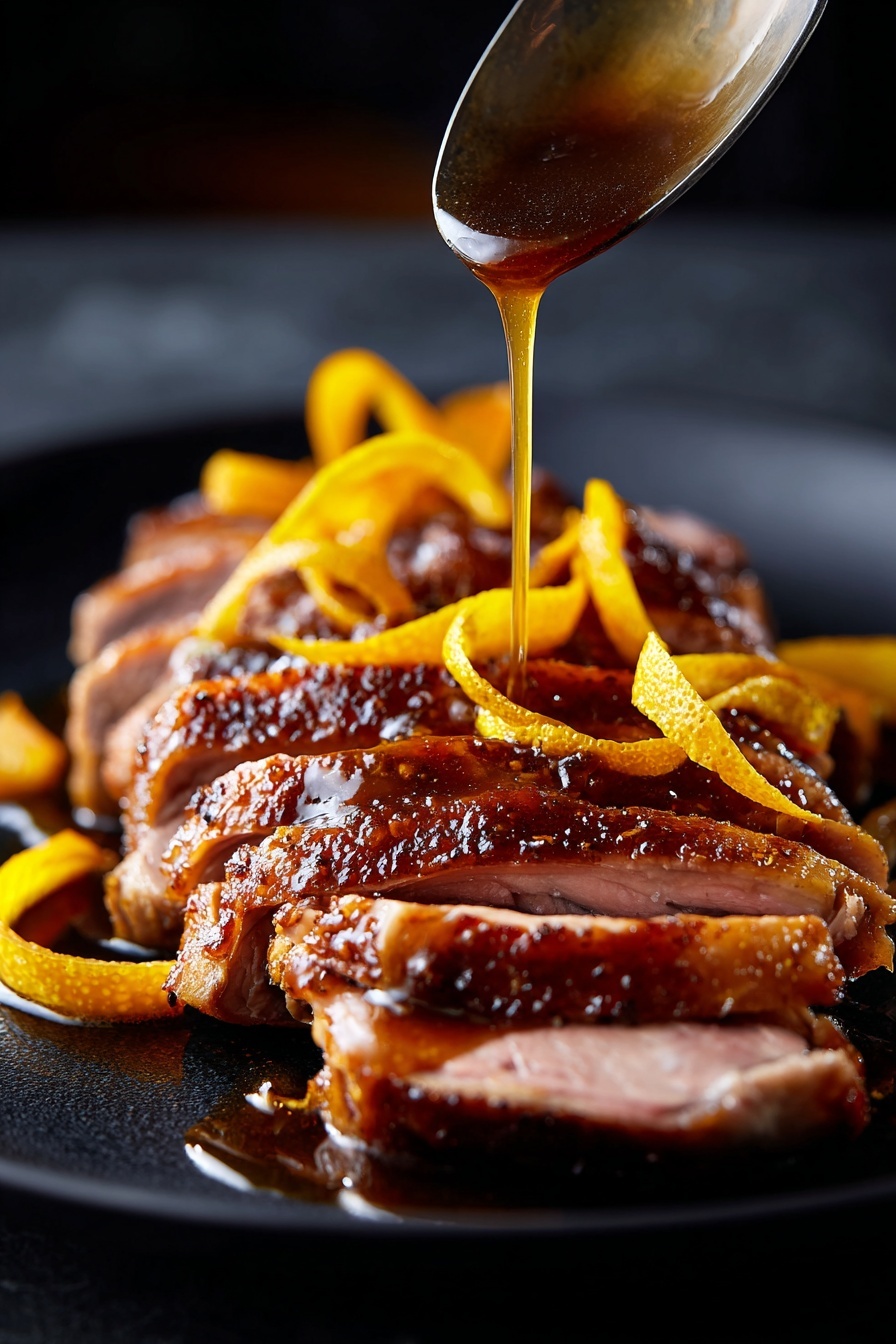
Rewarm your duck briefly in the oven to crisp the skin again, then carve and plate. Spoon that gorgeous savory orange sauce over or alongside each portion and prepare for compliments. I love using a sharp carving knife here to get tender slices without tearing the skin.
Pro Tips for Making Duck à l’Orange with Savory Sauce Recipe
- Pricking the Skin: Don’t skip this step—it’s the secret to rendering out fat and achieving crispiness without burning.
- Watch the Caramel: Sugar caramelizes quickly; keep your eyes on it and be ready to react when it reaches amber to avoid bitterness.
- Adjusting Sauce Thickness: If your stock isn’t gelatinous, use a cornstarch slurry to get that perfect coating consistency.
- Resting Time for Duck: Allow the bird to rest before carving to keep meat juicy and tender—rushing this leads to dry slices.
How to Serve Duck à l’Orange with Savory Sauce Recipe
Garnishes
I like to keep garnishes simple so the sauce shines—some fresh orange slices or thinly sliced green onions add a fresh burst and color contrast. Occasionally, I’ll sprinkle a few fresh thyme leaves for a herbal note that pairs so well with duck.
Side Dishes
This duck pairs beautifully with classic French sides like pommes purée (creamy mashed potatoes) or roasted root vegetables. If you want something lighter, a simple arugula salad dressed with lemon vinaigrette cuts through the richness beautifully.
Creative Ways to Present
For special occasions, I love plating the duck slices fanned out on a large platter with sauce drizzled artistically around. Sometimes I line the platter with sections of orange and fresh herbs to mirror the flavors in the dish, making the meal as pretty as it is delicious.
Make Ahead and Storage
Storing Leftovers
I always cool leftover duck and sauce separately, storing the meat in an airtight container in the fridge for up to 3 days. Keeping them apart helps maintain the crispness of the skin when reheated.
Freezing
You can freeze leftover cooked duck and sauce, but I recommend removing the skin or slicing before freezing to avoid sogginess. Wrap tightly in freezer-safe containers for up to 2 months. Thaw overnight in the fridge before reheating.
Reheating
To keep the duck skin crisp, I reheat slices in a hot oven (about 375°F / 190°C) on a wire rack for 8-10 minutes. Heat sauce gently on the stove over low heat, whisking occasionally so it stays smooth and doesn’t separate.
FAQs
-
Can I use duck breasts instead of a whole duck for this recipe?
Absolutely! Duck breasts cook faster than a whole duck and still develop a nice crispy skin when properly prepared. You’ll want to adjust cooking times accordingly—usually about 6-8 minutes per side in a pan—and you can still make the savory orange sauce to pair beautifully with them.
-
What’s the difference between using navel oranges and bitter oranges in this recipe?
Bitter oranges are traditional for duck à l’orange and provide a complex, slightly tart and floral note in the sauce. Navel oranges are sweeter and more readily available, making them an excellent substitute with a milder citrus profile. Using fresh zest and juice from either orange will deliver delicious results.
-
How do I know when the duck is fully cooked?
The best way is to use an instant-read thermometer in the thickest part of the thigh and breast. You’re aiming for about 175°F (79°C) because duck fat needs to be rendered fully for the best texture and flavor, and the meat will remain juicy at this temperature.
-
Can I make the sauce ahead of time?
Yes, you can prepare the sauce in advance and gently reheat it before serving. If it thickens too much after refrigeration, whisk in a splash of stock or water over low heat to loosen it right before serving.
Final Thoughts
This Duck à l’Orange with Savory Sauce Recipe has become one of my favorite indulgences to make when I want to feel fancy but stay grounded in authentic flavors. There’s something so satisfying about the crispy skin paired with that luscious, tangy sauce that always brings smiles around the table. I hope you’ll give this recipe a try—you don’t need to be a professional chef to pull it off, just a little patience and love. Once you do, I’m sure it’ll be a new classic in your home too.
Print
Duck à l’Orange with Savory Sauce Recipe
- Prep Time: 25 minutes
- Cook Time: 5 hours
- Total Time: 5 hours 25 minutes
- Yield: 4 servings
- Category: Main Course
- Method: Roasting
- Cuisine: French
Description
This classic Duck à l’Orange recipe features a perfectly roasted whole duck with crispy skin and a balanced, complex orange sauce that complements the rich, succulent meat. The sauce is a delicate blend of caramelized sugar, vinegar, citrus juice, and a rich reduced stock base, finished with butter for silkiness. With detailed roasting and sauce-making steps, this recipe results in an elegant and impressive dish perfect for special occasions or gourmet dinners.
Ingredients
For the Duck
- 1 whole duck (about 5 pounds; 2.25kg)
- Vegetable oil, for drizzling
- Kosher salt
For the Sauce Stock and Aromatics
- 1 medium carrot, diced
- 1 medium yellow onion, diced
- 1 large celery rib, diced
- 2 quarts (2 liters) brown beef or brown chicken stock
- 1 tablespoon (15ml) tomato paste (optional)
- Trimmed duck wing ends, neck, and backbone (if spatchcocked)
For the Orange Gastrique
- 4 ounces (115g) granulated sugar (about 1/2 cup plus 1 tablespoon)
- 1/2 cup red wine vinegar
- Zest of 1 navel orange or 2 bitter oranges, cleaned of pith and julienned
- 2 tablespoons (30ml) fresh navel orange juice or 1/4 cup (60ml) bitter orange juice
- 2 tablespoons fresh lemon juice (omit if using bitter orange juice)
- Freshly ground white or black pepper
- 2 tablespoons (30g) cold unsalted butter
- Cornstarch or arrowroot (optional, only if needed)
Instructions
- Spatchcock and Trim Duck: If desired, remove the backbone using poultry shears and flatten the duck by pressing down on the breast. Trim excess skin around the neck and cavity openings, remove wingette tips, neck and giblets. Reserve trimmed parts (wing ends, neck, backbone) for the sauce stock.
- Prick and Blanch Skin: Prick the duck skin all over with a sharp knife without cutting the meat. Briefly dip the duck in boiling water for 2 minutes using kitchen gloves to protect your hands, then drain and place breast side up on a wire rack over a rimmed baking sheet.
- Season and Dry: Season duck inside and out with kosher salt. Refrigerate uncovered for at least 1 hour and up to 24 hours to dry the skin for crispness.
- Prepare Sauce Stock Base: Preheat oven to 425°F (220°C). On a rimmed baking sheet, arrange trimmed duck wings, neck, and backbone with diced carrot, onion, and celery. Drizzle oil and rub to coat. Optionally rub tomato paste over duck and vegetables to deepen stock color. Roast, stirring occasionally, until browned (about 25 minutes).
- Simmer Stock: Transfer roasted trimmings and vegetables to a large saucepan with 2 quarts stock. Pour boiling water on the baking sheet to collect browned bits and add to stock. Simmer gently, skimming fat and scum, until reduced by half (1 to 2 hours). Strain and continue simmering strained stock until reduced to about 1 cup (225ml), about 1 to 1 1/2 hours. Set aside.
- Roast Duck: Increase oven to 450°F (230°C). Roast duck on wire rack and baking sheet for 30 minutes; be prepared for smoke. Reduce oven to 300°F (150°C) and continue roasting until internal temperature reaches 175°F in thickest parts (about 45 minutes for spatchcocked, 1 hour for whole). Remove and rest.
- Make Gastrique: In a small saucepan, combine sugar with 1/4 cup water over medium heat. Bring to a boil stirring with a fork until syrup forms, then simmer without stirring until deep amber (6-10 minutes). Remove from heat and slowly add red wine vinegar in small increments while swirling to prevent boil-over. Return to medium heat, boil briefly, then simmer 2 minutes. Set aside.
- Blanch Orange Zest: Boil about 1 cup water in a small saucepan. Add orange zest and blanch until softened: ~2 minutes for navel orange or 15 minutes for bitter orange. Drain and set aside.
- Reheat Duck and Prepare Sauce: When ready to serve, reheat duck in oven 5 to 15 minutes to re-crisp skin. In a small saucepan, combine reduced stock with fresh orange and lemon juices (or bitter orange juice). Simmer gently until slightly thickened (about 5 minutes).
- Finish Sauce: Add gastrique gradually, tasting until balanced sweet-sour flavor develops (about 2-4 teaspoons). Season with salt and pepper. Whisk in cold butter over low heat until sauce is smooth and glossy, avoiding boiling.
- Adjust Sauce Thickness and Add Zest: If sauce is too thin, mix cornstarch or arrowroot with a small amount of sauce to form a slurry and whisk back into sauce. Simmer gently for 1-2 minutes. Stir in blanched zest and simmer 1 minute to infuse flavor.
- Serve: Carve duck and spoon sauce over or alongside for a rich, balanced presentation.
Notes
- The sauce is designed to perfectly balance richness and acidity, cutting through the fatty richness of duck with a sweet and tangy profile.
- Spatchcocking the duck helps it roast more evenly and reduces total cooking time.
- Letting the duck dry uncovered in the fridge overnight helps ensure a crisp skin.
- Reserve leftover gastrique for drizzling on grilled vegetables or other dishes.
- Be cautious adding vinegar to hot caramel to prevent boil-over.
Nutrition
- Serving Size: 1/4 of duck with sauce
- Calories: 580 kcal
- Sugar: 10.25 g
- Sodium: 381 mg
- Fat: 44 g
- Saturated Fat: 15.25 g
- Unsaturated Fat: 0 g
- Trans Fat: 0 g
- Carbohydrates: 14 g
- Fiber: 0.5 g
- Protein: 30 g
- Cholesterol: 126.5 mg