

If you’ve never tried a Chicken Cacciatore Pasta Recipe, you’re in for a real treat. This dish marries tender, slow-simmered chicken thighs with a rich, tangy tomato sauce speckled with olives, capers, and roasted peppers, all served over wide ribbons of pappardelle. I absolutely love how the flavors meld together, and my family goes crazy for it every time I make it. Stick with me, and I’ll walk you through everything so your Chicken Cacciatore Pasta turns out just right — even if you’ve never made cacciatore before!
Why You’ll Love This Recipe
- Deep, comforting flavors: Simmering the chicken slowly in tomato, wine, and capers creates a sauce full of rich, complex taste.
- Tender chicken guaranteed: Using boneless, skinless thighs means juicy, fall-apart chicken every time without dry edges.
- Simple yet impressive: With a handful of ingredients and straightforward steps, you’ll serve a dish that feels like a labor of love.
- Perfect for gatherings or weeknights: It comes together nicely and reheats beautifully if you want to prep ahead.

Ingredients You’ll Need
Every ingredient here is chosen to balance one another — the chicken adds meatiness, the olives and capers bring briny zing, and the tomatoes provide a silky base. When shopping, look for good-quality canned plum tomatoes and black oil-cured olives for that authentic flavor.
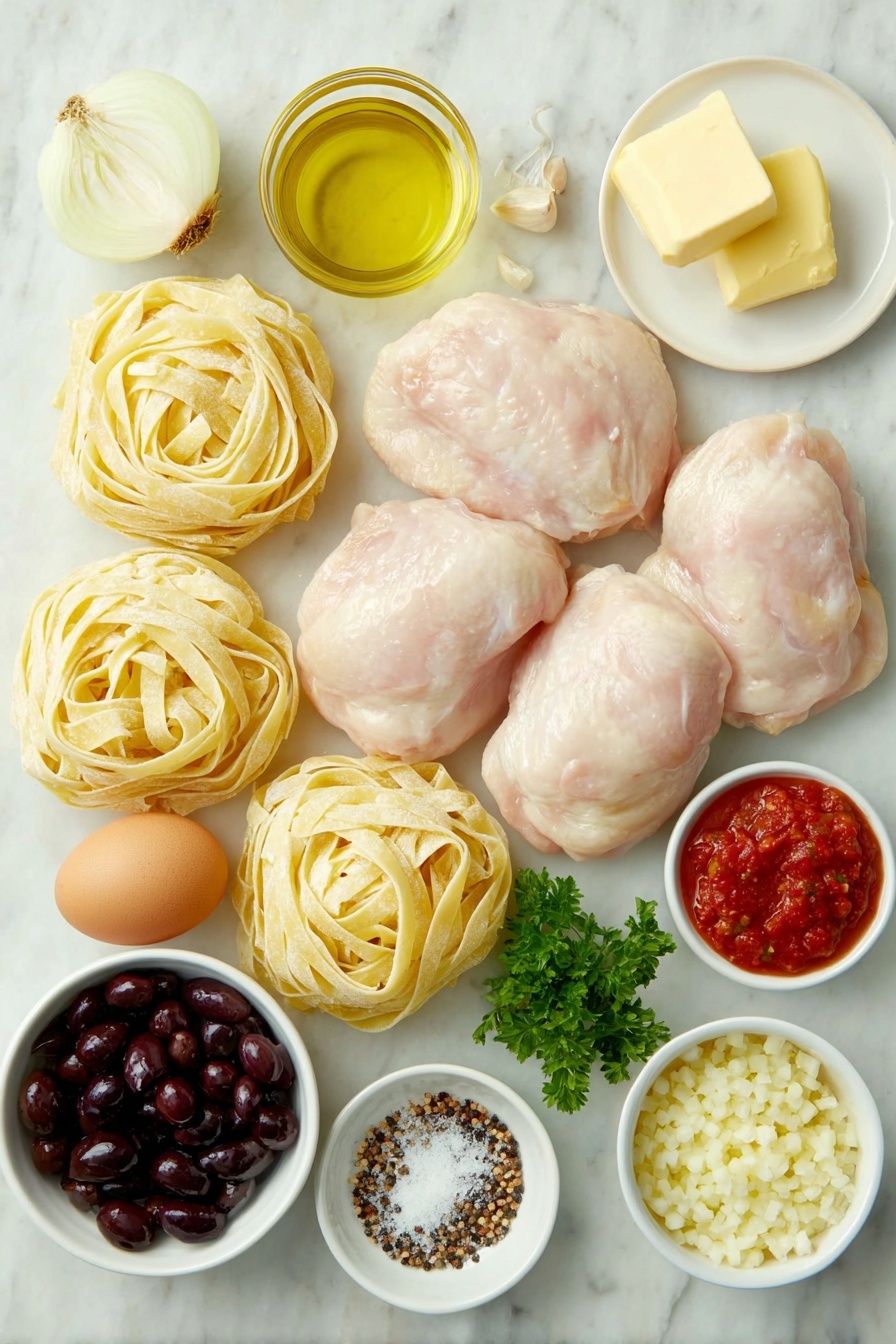
- Pappardelle: Wide, flat pasta holds onto the sauce beautifully, but you can swap in fettuccine if you’re in a pinch.
- Boneless skinless chicken thighs: Juicier and more forgiving than breasts, they’re key for tender results.
- Olive oil: Use a good quality one to get that subtle fruity aroma in your sear.
- Butter: Adds silky richness and helps brown the chicken and veggies perfectly.
- Onion: Sliced for sweetness and depth in the sauce.
- Red bell pepper: Offers sweetness and a little bite to balance tomatoes.
- Garlic: Minced fresh garlic is essential for that vibrant punch.
- Tomato paste: Concentrates tomato flavor without watering down.
- Plum tomatoes (canned): Use hand crushed or pulse in a blender for chunkier sauce texture.
- Dry white wine: It brightens the sauce and adds complexity; just choose something you’d enjoy drinking.
- Low-sodium chicken stock: Keeps the sauce flavorful but not overly salty.
- Black oil-cured olives: These give a deep savory hit; rinse and pit to keep the sauce smooth.
- Capers: Small bursts of briny flavor that make the dish sing.
- Flat-leaf Italian parsley: Fresh herbs lift and brighten the final dish.
- Salt and pepper: To season carefully as you cook and at the end.
Variations
I love making this Chicken Cacciatore Pasta Recipe just as written, but don’t hesitate to make it your own. Pair it with your personal favorite ingredients or dietary needs—it’s all about what you enjoy.
- Switch up the pasta: I sometimes use rigatoni or penne for a more rustic, toothsome bite, especially if I want the sauce to cling around tubular shapes.
- Go lean with chicken breasts: If thighs aren’t available, chicken breasts work fine—just be careful not to overcook to keep it tender.
- Spicy kick: Add a pinch of red pepper flakes when sautéing the onions and peppers for subtle heat that wakes up the flavors.
- Make it gluten-free: Use gluten-free pasta and double-check your stock ingredients to keep everyone happy.
How to Make Chicken Cacciatore Pasta Recipe
Step 1: Brown the chicken beautifully
First, dry your chicken thighs really well (patting with paper towels is a must!) and season all sides with salt and pepper. This helps achieve a golden, flavorful crust instead of steaming the meat. Warm your pan over medium-high heat with olive oil and a tablespoon of butter, then sear the chicken in batches so you don’t crowd the pan. Each piece needs about 3-4 minutes per side to brown nicely. Set the browned chicken aside with a light sprinkle of salt—this little step locks in flavor early on.
Step 2: Sauté veggies and build your base
Turn the heat to medium and toss in the remaining butter, sliced onions, and red bell peppers. Stir occasionally for about 7-10 minutes until everything softens and smells sweet. Next up—add your minced garlic and cook another 2 minutes so its aroma fills the kitchen without burning. This is when your sauce really starts coming to life.
Step 3: Develop flavor with tomato paste and liquids
Stir in the tomato paste and watch carefully as it begins to cook down. If it looks like it might stick or burn, splash in a little water to keep it smooth. Cook it for about 5 minutes, stirring regularly—it thickens and intensifies the tomato flavor, so don’t skim this step. Next, pour in the white wine and chicken stock and crank the heat back up to high. Bring the mixture to a boil and use your spoon to scrape any browned bits off the pan’s bottom—these add massive flavor! Let the liquid reduce by about half, concentrating those lovely flavors.
Step 4: Add tomatoes and simmer chicken long and low
Add the crushed plum tomatoes and nestle the chicken back in the pan. Stir gently to combine and bring everything to a low simmer. Cover partially, and let it bubble away for 30-40 minutes until the chicken is tender enough to pull apart with a fork. Resist rushing this part—the slow simmer softens the chicken and lets the sauce deepen into something special. Taste the sauce now and season lightly with salt, keeping in mind later you’ll add salty capers and olives.
Step 5: Cook pasta and finish the sauce
While the sauce is doing its magic, bring a large pot of salted water to a rolling boil. Cook your pappardelle until just one minute shy of al dente—remember, it will finish cooking in the sauce. When the pasta is nearly ready, gently remove the chicken pieces and cover them to keep warm. Toss in your capers and chopped olives into the sauce and stir to combine. Add the almost-cooked pasta directly to the sauce pan with a splash of that reserved pasta water if needed. Let the pasta cook in the sauce until perfectly al dente, then remove from heat. Adjust seasoning with salt and pepper, then stir in fresh minced parsley for brightness.
Step 6: Serve and dig in!
Plate your pasta with a generous ladle of sauce, then top or arrange the tender chicken pieces on the side. I always have freshly grated Parmesan on hand—it’s a classic finish that brings everything together beautifully. Pour yourself a glass of the white wine you used in the sauce, sit back, and enjoy a truly comforting meal.
Pro Tips for Making Chicken Cacciatore Pasta Recipe
- Pat chicken dry before searing: This step ensures you get that beautiful golden crust without steaming the meat.
- Don’t rush the tomato paste cooking: Allow it to caramelize slightly to deepen the sauce’s flavor instead of leaving it raw and tangy.
- Use reserved pasta water wisely: Adding a splash helps loosen thick sauce and helps it cling to your pasta, keeping every bite saucy and delicious.
- Avoid over-salting early on: Wait to add salt until after olives and capers join the sauce; they bring natural saltiness you don’t want to overpower.
How to Serve Chicken Cacciatore Pasta Recipe

Garnishes
For garnishes, I always reach for freshly grated Parmesan cheese—it melts beautifully into the hot pasta and adds that salty creaminess. A sprinkle of extra chopped parsley lifts the dish with bright green color and fresh herbal notes. Sometimes I add a drizzle of good olive oil or a pinch of red pepper flakes for a little extra zing.
Side Dishes
This Chicken Cacciatore Pasta pairs wonderfully with a crisp green salad dressed simply with lemon and olive oil. Crusty bread or garlic focaccia is perfect to mop up that rich sauce. If you want a heartier side, roasted or steamed vegetables like asparagus or broccoli work great to balance the meal.
Creative Ways to Present
For special dinners, I love serving this pasta in shallow bowls, then laying the chicken pieces right on top with a sprig of parsley for a rustic Italian vibe. You can also portion the sauce and chicken in individual ramekins for a charming presentation when entertaining guests—it makes everyone feel a little fancy!
Make Ahead and Storage
Storing Leftovers
When leftovers happen (and they often do, because this recipe makes plenty!), I store the Chicken Cacciatore Pasta in airtight containers in the fridge. The sauce actually gets better overnight as the flavors deepen. I keep the chicken and pasta together to make reheating easy and mess-free.
Freezing
This recipe freezes beautifully. Just cool it completely, then pack into freezer-safe containers. When I thaw it, the chicken stays tender, and the sauce keeps its richness. Freeze in individual portions for easy meals later on.
Reheating
I reheat leftovers gently in a skillet over low-medium heat, adding a splash of water or chicken stock if the sauce has thickened too much. This helps keep the pasta saucy and the chicken moist. A quick sprinkle of fresh parsley or Parmesan before serving brings it back to life.
FAQs
-
Can I use chicken breasts instead of thighs in this Chicken Cacciatore Pasta Recipe?
Absolutely! Chicken breasts work well, but since they’re leaner, you’ll want to watch the cooking time to avoid drying them out. Sear them carefully and reduce simmering time slightly, or keep the sauce covered to retain moisture.
-
What type of pasta works best in Chicken Cacciatore Pasta Recipe?
Pappardelle is ideal because its wide ribbons catch the chunky sauce perfectly. However, you can swap in fettuccine, rigatoni, or even penne if you prefer. Just be sure to reserve some pasta water to help the sauce cling nicely.
-
Is it necessary to use white wine in the recipe?
While white wine adds a lovely depth and acidity to the sauce, you can replace it with extra chicken stock or a splash of white grape juice if you’d rather avoid alcohol. Just keep in mind the wine really enriches the flavor profile.
-
How can I make this recipe gluten-free?
Use gluten-free pasta and double-check that your chicken stock or other ingredients don’t contain gluten. This way, you get the same delicious flavors without gluten worry.
Final Thoughts
This Chicken Cacciatore Pasta Recipe has become one of my go-to comfort meals, especially when I want something that feels a bit special but stays easy to prepare. The combination of tender chicken and rich, vibrant tomato sauce over silky pappardelle makes it a crowd-pleaser every time. I hope you enjoy making and sharing this dish as much as I do—it’s one of those recipes that takes a simple weeknight dinner to something memorable. Give it a try, and let me know how it turns out in your kitchen!
Print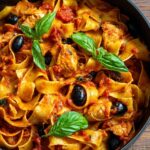
Chicken Cacciatore Pasta Recipe
- Prep Time: 15 minutes
- Cook Time: 60 minutes
- Total Time: 75 minutes
- Yield: 6 servings
- Category: Main Course
- Method: Stovetop
- Cuisine: Italian
Description
Chicken Cacciatore Pasta features tender braised chicken thighs simmered in a rich tomato sauce with red bell peppers, olives, and capers, served over wide pappardelle noodles. This hearty Italian-inspired dish balances savory, tangy, and aromatic flavors for a comforting yet elegant meal.
Ingredients
For the Pasta
- 1 pound pappardelle
For the Chicken and Sauce
- 2 pounds boneless skinless chicken thighs
- 2 tablespoons olive oil
- 4 tablespoons butter, cubed (divided)
- 1 large onion, sliced
- 1 large red bell pepper, sliced
- 6 cloves garlic, minced
- 3 ounces tomato paste
- 28 ounce can plum tomatoes, hand crushed or blender pulsed
- 3/4 cup dry white wine
- 1 cup low-sodium chicken stock
- 3/4 cup black oil-cured olives, rinsed, pitted and chopped
- 3 tablespoons capers, rinsed
- Salt and pepper, to taste
- 1/4 cup flat-leaf Italian parsley, minced
- 1 cup reserved pasta water (optional, for sauce consistency)
Instructions
- Prepare and Sear Chicken: Heat a large saucepan or Dutch oven over medium-high heat with olive oil. Pat chicken thighs dry with paper towels and season all over with salt and pepper. Add chicken to the pan with 1 tablespoon butter and sear each side for 3-4 minutes until well browned. Sear chicken in batches, adding 1 tablespoon butter for each batch and avoid crowding the pan. Transfer seared chicken to a plate and sprinkle with a pinch more salt.
- Sauté Vegetables: Reduce heat to medium. Add remaining butter along with the sliced red bell pepper and onion to the same pan. Sauté until softened, about 7-10 minutes. Add minced garlic and cook an additional 2 minutes until fragrant.
- Cook Tomato Paste: Stir in tomato paste and cook for 5 minutes, stirring frequently to prevent burning. Add a splash of water if the paste starts to stick or burn.
- Add Liquids and Simmer: Pour in white wine and chicken stock, increasing heat to high. Bring mixture to a boil while scraping the pan’s bottom to loosen browned bits. Reduce the liquid by half, then add the crushed plum tomatoes. Return the seared chicken pieces to the pan and stir well. Lower heat to maintain a gentle simmer.
- Braise Chicken: Simmer uncovered on low heat for 30-40 minutes until the chicken is very tender and infused with the sauce flavors. Taste the sauce and season lightly with salt, as the olives and capers will add more saltiness later.
- Cook Pasta: Meanwhile, bring a large pot of salted water (2 tablespoons salt per gallon) to a boil. Cook pappardelle until one minute shy of al dente. Reserve 1 cup of pasta water and drain the pasta.
- Finish Sauce: Remove chicken pieces to a plate and tent with foil to keep warm. Stir capers and chopped olives into the simmering sauce.
- Combine Pasta and Sauce: Add the drained pasta to the sauce. Toss thoroughly to coat the noodles, adding reserved pasta water if needed to loosen the sauce. Cook together just until the pasta reaches al dente texture. Remove from heat and taste, adjusting salt and pepper as desired. Stir in minced parsley for freshness.
- Serve: Plate the pasta with sauce, then top or serve alongside the tender chicken. Offer grated Parmesan cheese at the table for added richness. Enjoy your flavorful Chicken Cacciatore Pasta!
Notes
- Chicken cacciatore pasta combines tender braised chicken thighs with pappardelle pasta in a flavorful tomato, pepper, olive, and caper sauce.
- Make sure to dry the chicken well before searing to achieve a good brown crust.
- Do not overcrowd the pan when searing chicken to ensure proper browning.
- Simmering the chicken slowly in the sauce develops deep, rich flavor and tender texture.
- Reserve pasta water to adjust sauce consistency if it gets too thick when combining with pasta.
- Serve with freshly grated Parmesan for best flavor.
Nutrition
- Serving Size: 1 serving
- Calories: 685 kcal
- Sugar: 10.9 g
- Sodium: 204 mg
- Fat: 18.6 g
- Saturated Fat: 7.1 g
- Unsaturated Fat: 10.5 g
- Trans Fat: 0 g
- Carbohydrates: 67.8 g
- Fiber: 5 g
- Protein: 56.2 g
- Cholesterol: 137 mg