
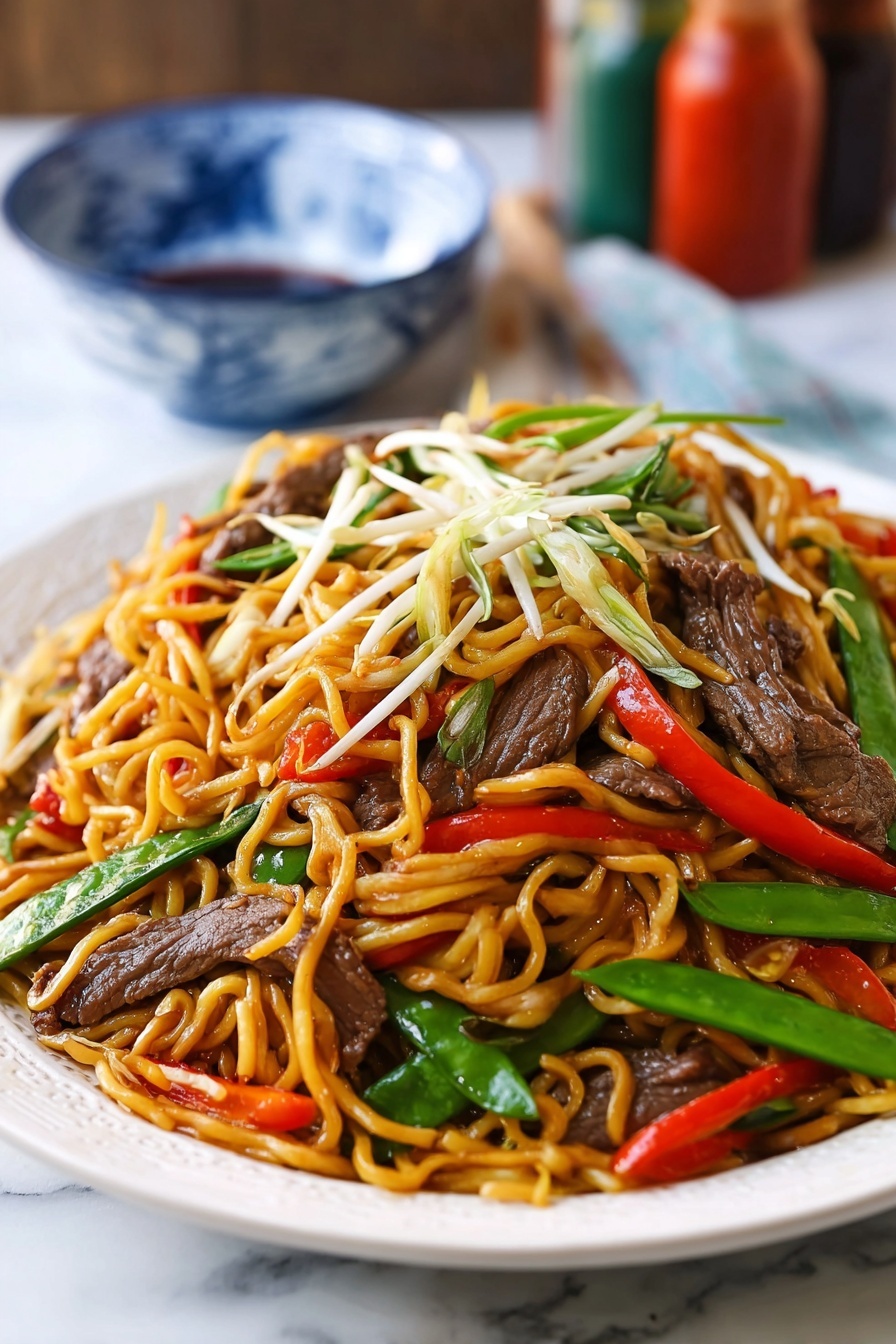
If you’re craving something hearty, packed with flavor, and easy enough for a weeknight dinner, then this Beef Lo Mein Stir-Fry Recipe is absolutely the one to try. I absolutely love how tender the beef turns out and how all those vibrant veggies mingle with the perfect sauce for a dish that just feels like a warm, comforting hug from the inside. Trust me—you’ll want to keep this recipe close because it’s not only delicious but surprisingly simple once you get the steps down.
Why You’ll Love This Recipe
- Tender Beef Every Time: The velveting marinade trick makes the steak melt in your mouth.
- Colorful Veggies: A vibrant mix of crunchy and soft textures that brighten up your meal.
- Quick & Easy: Ready in under an hour, perfect for busy evenings yet impressive enough to serve guests.
- Authentic Flavor: Uses a blend of soy sauces and oyster sauce that hits all the right savory notes.

Ingredients You’ll Need
The ingredients here are a blend of pantry staples and fresh veggies that work together beautifully. I always recommend grabbing fresh lo mein noodles if you can find them in your Asian market; they make a noticeable difference in texture and flavor.
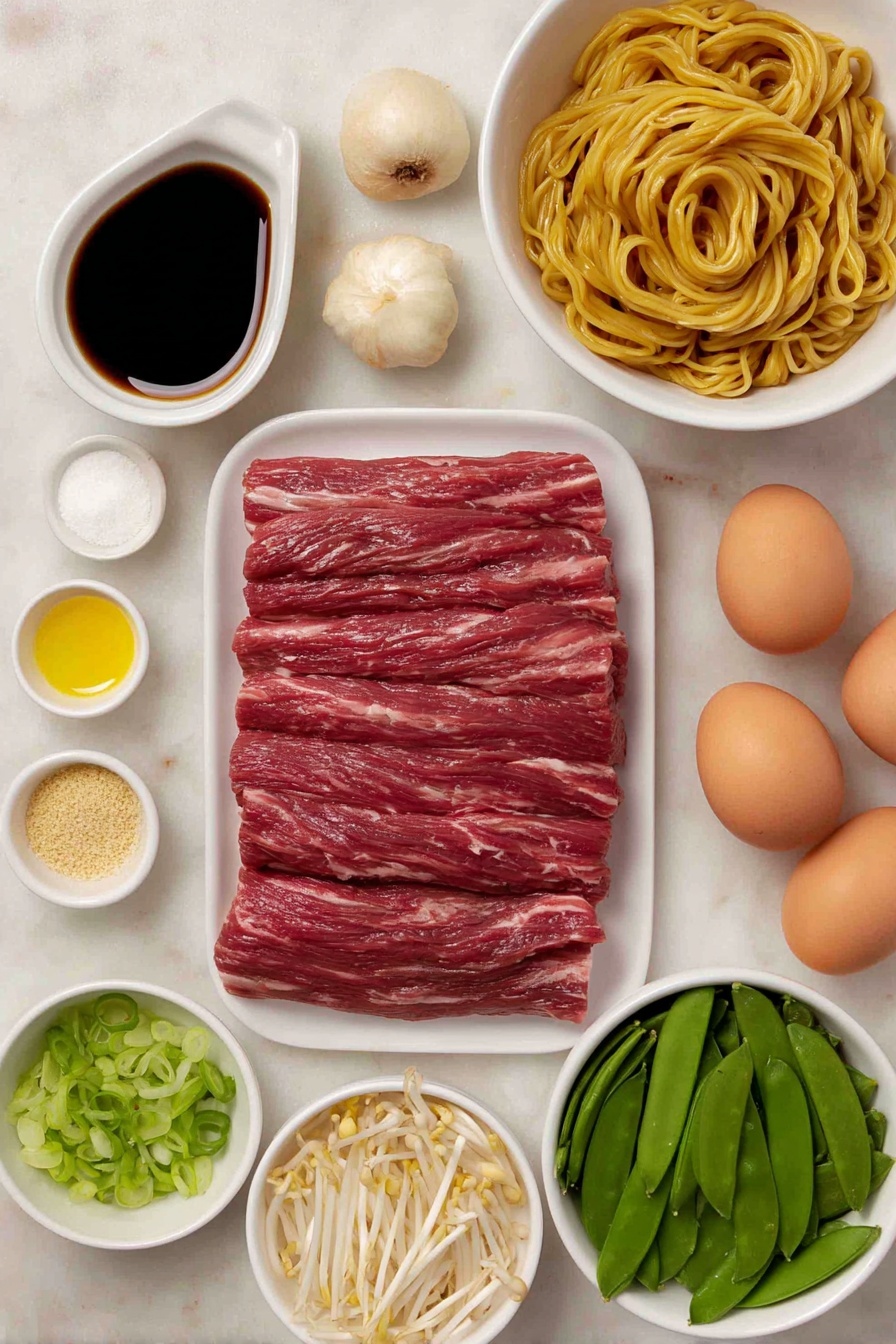
- Flank steak: This cut is perfect for quick stir-fries and gets wonderfully tender when marinated properly.
- Cornstarch: Helps give the beef a nice velvety texture when combined with the marinade.
- Soy sauce (light, dark): A balance of saltiness and depth; dark soy adds color and richness.
- Oyster sauce: Adds that umami kick that makes this dish pop.
- Sesame oil: Just a little goes a long way for that signature nutty aroma.
- Baking soda: A surprising secret to tenderize the beef before cooking.
- Fresh lo mein noodles: The star carbohydrate—make sure they’re loose and not clumped for best results.
- Garlic: Essential aromatic that wakes up the whole stir-fry.
- Carrot, red bell pepper, mushrooms, bamboo shoots, napa cabbage, snow peas, mung bean sprouts: A colorful mix for texture and nutrition.
- Shaoxing wine: Great for adding depth of flavor and subtle sweetness.
- Scallions: The green parts go in at the end for freshness, while the white parts get stir-fried early for flavor.
- Vegetable oil: For stir-frying—neutral but high smoke point is key.
Variations
I love switching things up sometimes with this Beef Lo Mein Stir-Fry Recipe to keep it fresh and fit whatever mood I’m in. You’ll find that it adapts well to different veggies and seasonings too.
- Protein swaps: I’ve tried it with chicken or tofu, and it’s delicious either way—just adjust cooking times accordingly.
- Vegetarian version: Skip the beef and double up on mushrooms and bean sprouts; add a splash more soy sauce for depth.
- Spicy kick: Toss in some sliced fresh chili or a spoonful of chili garlic sauce for heat.
- Low-sodium: Use low-sodium soy sauce and cut back on added salt; the layered flavors still shine through.
How to Make Beef Lo Mein Stir-Fry Recipe
Step 1: Marinate the Beef for Tenderness and Flavor
Start by slicing your flank steak thinly against the grain—this helps keep the beef tender and easy to chew once cooked. Toss the slices in a small bowl with baking soda, cornstarch, soy sauce, and vegetable oil. I discovered this velveting technique after struggling with tough steak in stir-fries; it really works wonders! Let it sit and marinate for about 30 minutes while you prep your veggies and noodles. This step ensures every bite of beef stays juicy and flavorful.
Step 2: Mix the Perfect Lo Mein Sauce
Combine your light soy sauce, oyster sauce, dark soy sauce, sesame oil, salt, sugar, and white pepper in a small bowl. Having this ready ahead of time makes the tossing part much smoother. I like to taste a little of the sauce on its own to make sure it’s balanced—adjust salt or sweetness until it sings to your palate.
Step 3: Prepare the Noodles and Veggies
If you’re using fresh lo mein noodles, give them a quick rinse in hot water to loosen them up and prevent sticking. If packaged noodles are uncooked, cook them until al dente, then drain well. Make sure your garlic is minced and all veg are sliced and ready to go in the order you’ll need them—this is essential because stir-frying moves fast! Lay out your carrots, bell peppers, mushrooms, bamboo shoots, napa cabbage, snow peas, mung bean sprouts, and scallions so you’re not scrambling once the wok’s hot.
Step 4: Sear the Beef Quickly
Heat your wok on high until it just starts to smoke—a very hot wok is key to getting that signature sear and flavor from the beef. Add a tablespoon of vegetable oil and lay the marinated beef in a single layer. Only about 30 seconds a side is all it takes to get a beautiful sear without overcooking. Remove the beef and set it aside; don’t overcrowd the wok or the beef will steam instead of sear.
Step 5: Stir-Fry the Vegetables
Add the remaining oil, then toss in the garlic, carrots, red bell peppers, and mushrooms. Stir-fry briskly for about 30 seconds to release their aromas. Follow with the bamboo shoots and white parts of the scallions, stirring for 20 seconds. Toss in the napa cabbage, turning up the heat to the highest setting, and stir everything for another 30 seconds. Keeping things moving fast preserves the crunch and vibrant colors you want.
Step 6: Combine Noodles, Sauce, and Shaoxing Wine
Add your prepared noodles to the wok—make sure they’re loose and warm or at room temperature to prevent clumps. Pour the Shaoxing wine around the edges of the wok; this adds a subtle depth that I personally adore. Using a scooping and tossing motion, combine the veggies and noodles. After about 30 seconds to a minute, pour in your pre-mixed lo mein sauce. Keep tossing on high heat, scraping the bottom of the wok so nothing sticks or burns. This step is where everything starts to come together beautifully.
Step 7: Finish with Snow Peas, Bean Sprouts, and Beef
Now add your snow peas, mung bean sprouts, and the seared beef along with any juices resting in the bowl. Keep stir-frying until the ingredients are heated through and well mixed. Toss in the green parts of the scallions last for that fresh, oniony brightness. Then give it a final taste and adjust seasoning—maybe a little more soy sauce or a dash of white pepper if you want to amp it up.
Plate it up and serve with your favorite chili oil or hot sauce—my family goes crazy for that little extra kick.
Pro Tips for Making Beef Lo Mein Stir-Fry Recipe
- Velveting the Beef: Using baking soda in the marinade tenderizes the meat beautifully—don’t skip this step!
- High Heat is Your Friend: A scorching-hot wok ensures quick cooking, perfect searing, and that slight smoky “wok hei” flavor.
- Prep in Advance: Have all your ingredients chopped and sauce mixed beforehand—stir-frying is fast, and you don’t want to be scrambling.
- Prevent Clumpy Noodles: Rinse noodles in hot water if they stick together; warm noodles blend better with sauce and veggies.
How to Serve Beef Lo Mein Stir-Fry Recipe
Garnishes
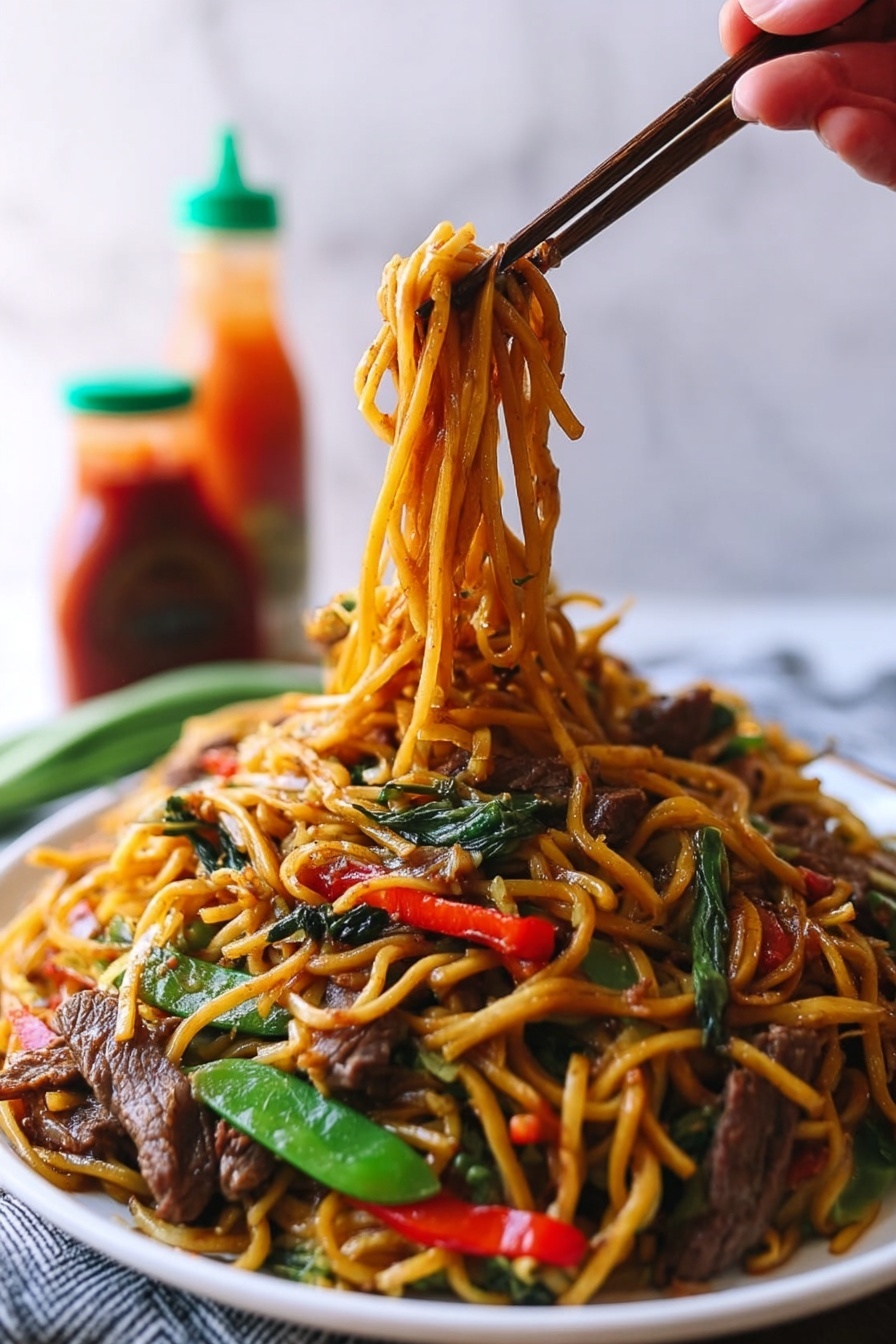
I love topping this dish with a sprinkle of toasted sesame seeds and a few extra sliced scallions for brightness and a little crunch. If you enjoy heat like I do, a drizzle of chili garlic oil or freshly chopped red chili peppers adds a fantastic finishing touch. These simple garnishes make the dish look restaurant-worthy in a snap.
Side Dishes
This Beef Lo Mein Stir-Fry pairs beautifully with simple sides like steamed bok choy with garlic, crispy spring rolls, or even a light cucumber salad with rice vinegar. For something heartier, I sometimes serve it alongside hot and sour soup to round out the meal with contrasting flavors and textures.
Creative Ways to Present
For a fun dinner party, I’ve served the lo mein in individual mini wok-shaped bowls or hollowed-out bell peppers for a colorful presentation. You can also scatter edible flowers or microgreens on top for an elegant touch. Presentation is all about adding a little wow factor without extra fuss!
Make Ahead and Storage
Storing Leftovers
I store leftovers in an airtight container in the refrigerator, where they keep well for up to 3 days. I find it helps to refrigerate the noodles somewhat separated rather than clumped together to preserve texture better. When you reheat, adding a splash of water or broth helps prevent dryness.
Freezing
While you can freeze Beef Lo Mein Stir-Fry, I prefer to freeze the beef and veggies separately from the noodles to avoid sogginess. Thaw overnight in the fridge and reheat gently on the stove for best texture. Personally, I find fresh leftovers taste best, but frozen works fine in a pinch.
Reheating
Reheat leftovers in a hot skillet or wok with a drizzle of oil and a splash of water to steam just enough and warm everything through evenly. I avoid microwaving because it tends to make the noodles mushy and the beef less tender. Stir-frying again brings back that fresh-from-the-wok taste.
FAQs
-
Can I use a different cut of beef for this recipe?
Absolutely! While flank steak is great for its tenderness and quick cooking, you can use sirloin or skirt steak as alternatives. Just be sure to slice thinly against the grain to keep it tender. Avoid tougher cuts that require long cooking times since this recipe is quick-cooking.
-
What if I can’t find fresh lo mein noodles?
No worries! You can substitute with dried lo mein or spaghetti noodles. Cook them until al dente, rinse with hot water to separate, and then add to the stir-fry. Fresh noodles give the best texture, but this adjustment still yields tasty results.
-
How can I make this recipe gluten-free?
Use gluten-free soy sauce or tamari and make sure your oyster sauce is gluten-free (there are some brands that offer this). Also, pick gluten-free noodles like rice noodles or gluten-free lo mein alternatives. The flavor will still shine through with these swaps.
-
Can I make the Beef Lo Mein Stir-Fry Recipe ahead of time?
You can prep all your vegetables, slice the beef, and make the sauce in advance. I usually wait to stir-fry everything until just before serving to keep the veggies crisp. Fully cooked, it’s best enjoyed fresh but reheats well if needed.
Final Thoughts
This Beef Lo Mein Stir-Fry Recipe has become one of my absolute favorites for good reason—it combines quick prep with big, authentic flavor and super satisfying textures. Whether you’re cooking for your family or want a cozy meal after a long day, this dish hits the spot every time. I truly hope you enjoy making it as much as I do and that it becomes a staple in your kitchen like it has in mine. Grab your wok, and let’s get cooking!
Print
Beef Lo Mein Stir-Fry Recipe
- Prep Time: 35 minutes
- Cook Time: 10 minutes
- Total Time: 45 minutes
- Yield: 6 servings
- Category: Main Course
- Method: Stovetop
- Cuisine: Chinese
Description
This Beef Lo Mein recipe delivers a delicious, restaurant-quality Chinese takeout experience at home, packed with tender marinated flank steak, fresh vegetables, and perfectly cooked lo mein noodles tossed in a savory soy-based sauce. The stir-frying technique ensures vibrant, crisp veggies and a flavorful, velvety beef, all ready in under an hour for a satisfying, wholesome meal.
Ingredients
Beef Marinade
- 12 ounces flank steak
- 1 teaspoon cornstarch
- 1 teaspoon soy sauce
- 1 teaspoon vegetable oil
- 1/4 teaspoon baking soda
Sauce
- 1 tablespoon light soy sauce
- 1 tablespoon oyster sauce
- 2 teaspoons dark soy sauce
- 1/2 teaspoon sesame oil
- 1/2 teaspoon salt (or to taste)
- 1/4 teaspoon sugar
- 1/4 teaspoon white pepper
Main Ingredients
- 1 pound fresh lo mein noodles
- 1 clove garlic, minced
- 1 medium carrot, julienned
- 1/2 red bell pepper, julienned
- 1/2 cup mushrooms, sliced
- 1/2 cup bamboo shoots, strips or sliced
- 2 cups Napa cabbage, shredded
- 2/3 cup snow peas
- 2 cups mung bean sprouts
- 2 tablespoons vegetable oil, divided
- 1 tablespoon Shaoxing wine
- 2 scallions, julienned (white and green parts separated)
Instructions
- Marinate the Beef: Slice the flank steak thinly against the grain. In a small bowl, combine the sliced beef with baking soda, cornstarch, soy sauce, and vegetable oil. This velveting process tenderizes the beef and imparts a glossy finish. Let it marinate for 30 minutes.
- Prepare the Sauce: In a separate small bowl, mix light soy sauce, oyster sauce, dark soy sauce, sesame oil, salt, sugar, and white pepper thoroughly to form the lo mein sauce.
- Prepare the Noodles and Vegetables: If using cooked lo mein noodles, rinse them under hot water to loosen and drain. If using uncooked noodles, cook per package directions until al dente and drain well. Have minced garlic and all vegetables prepped and arranged in order of cooking.
- Sear the Beef: Heat a wok over high heat until slightly smoking. Add 1 tablespoon vegetable oil and spread it to coat. Add the marinated beef in a single layer and sear each side for about 30 seconds. Remove beef and set aside.
- Stir-fry Vegetables Part 1: Add remaining tablespoon of vegetable oil to the wok, then add garlic, carrot, bell pepper, and mushrooms. Stir-fry for 30 seconds on high heat.
- Stir-fry Vegetables Part 2: Add bamboo shoots and white parts of scallions; stir-fry for 20 seconds. Then add Napa cabbage and stir-fry together vigorously for another 30 seconds, keeping heat at its highest.
- Add Noodles and Wine: Add the prepared noodles (make sure they are warm or room temperature and loosened). Pour Shaoxing wine around the wok edges. Toss everything with a scooping motion until noodles are warmed, about 30 seconds to 1 minute.
- Add Sauce and Stir-fry: Pour in the pre-mixed lo mein sauce. Stir constantly with a scooping motion and scrape the wok bottom to prevent sticking until the sauce is evenly distributed.
- Combine Remaining Ingredients: Add snow peas, mung bean sprouts, and the seared beef with any juices. Continue stir-frying until everything is heated through and well mixed.
- Finish and Serve: Toss in the green parts of scallions. Taste and adjust seasoning with additional salt, soy sauce, oyster sauce, sesame oil, or white pepper as preferred. Serve hot with optional chili oil or hot sauce on the side.
Notes
- This homemade Beef Lo Mein rivals takeout with fresher vegetables and perfectly tender beef.
- Velveting the beef with baking soda and cornstarch tenderizes it for the ideal texture.
- Use a well-seasoned wok and high heat for best stir-frying results.
- If noodles stick together, rinse them in hot water before cooking.
- Adjust seasoning to taste to suit your palate.
Nutrition
- Serving Size: 1 serving
- Calories: 323 kcal
- Sugar: 5 g
- Sodium: 819 mg
- Fat: 12 g
- Saturated Fat: 6 g
- Unsaturated Fat: 5 g
- Trans Fat: 1 g
- Carbohydrates: 34 g
- Fiber: 2 g
- Protein: 19 g
- Cholesterol: 54 mg